
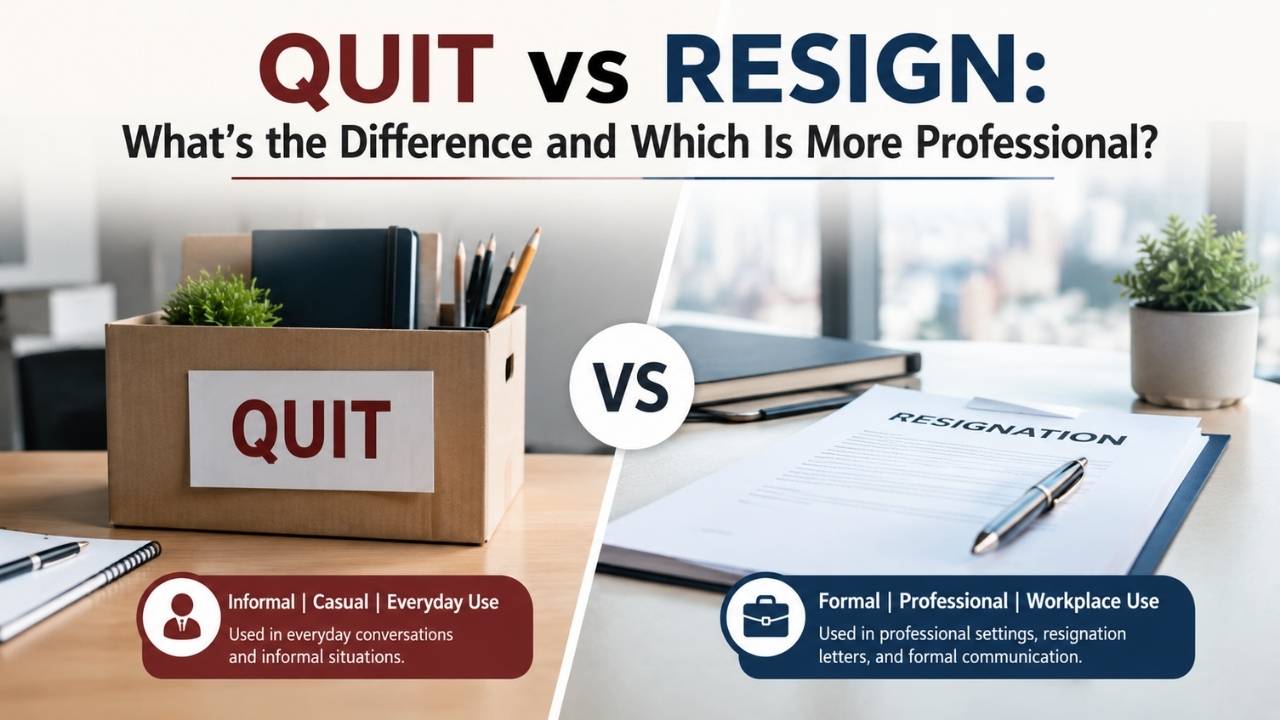
Many people use quit and resign in the same way, but these words create very different impressions in workplace communication. Both terms mean leaving a job, yet the tone and level of professionalism change depending on which word you choose. In casual speech, people often say they “quit a job.” In a formal setting, employees usually “resign from a position” because it sounds more respectful and professional.
Understanding the difference between quit vs resign can help you communicate clearly with employers, managers, and HR teams. It also helps you maintain a strong professional image when leaving a company. In this guide, you will learn the real difference between quitting vs resigning, when to use each word, and which term works best in professional situations.
Quick Answer: Quit vs Resign
Quit and resign both mean leaving a job, but they differ in tone and professionalism. The word quit sounds casual and informal, while resign sounds formal and respectful. Employees usually resign from a position in professional settings, resignation letters, and workplace communication. In most business situations, using resign creates a more professional and positive impression.
What Does “Quit” Mean?
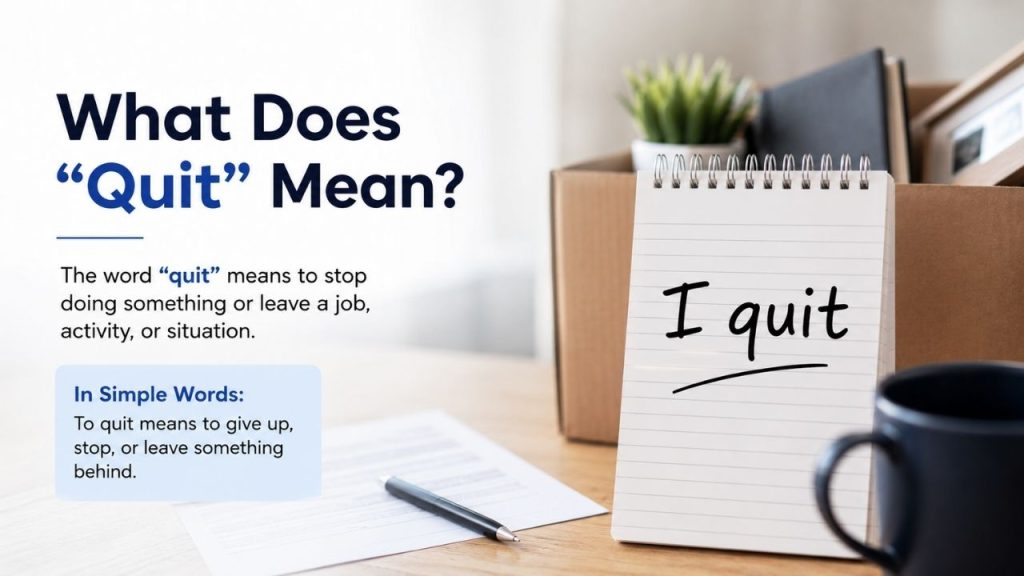
The word quit means to stop doing something or leave a situation. People commonly use it in casual conversations and everyday language. In a work context, quitting a job means leaving employment without using formal or professional wording.
Many employees say, “I quit my job,” when speaking with friends or family. The phrase sounds direct and informal. Sometimes, it can also show frustration or strong emotion. Because of this tone, companies rarely use the word quit in official workplace communication.
The word also appears outside work situations. For example, people quit smoking, quit sports, or quit bad habits. In professional settings, however, using quit may sound less polished than saying resign. Understanding the meaning of quit vs resign helps you choose the right word for each situation and maintain a better professional image.
What Does “Resign” Mean?
The word resign means to officially leave a job, role, or professional position. People mainly use this term in formal and workplace settings. When an employee resigns, they usually inform their manager or HR department through a resignation letter or email.
In professional communication, the phrase resign from a position sounds respectful and organized. It shows that the employee plans to leave the company in a professional manner. Employers often view resignation more positively because it follows proper workplace etiquette.
For example, someone may say, “I decided to resign from my role after accepting a new opportunity.” This wording sounds calm and professional. Unlike the word quit, the term resign does not usually carry an emotional tone. Learning the difference between quitting vs resigning helps employees communicate more clearly in formal business situations.
Quit vs Resign: Key Differences
Although quit and resign both mean leaving a job, they differ in tone, formality, and workplace usage. The word quit sounds casual and informal. People often use it during emotional or everyday conversations. In contrast, resign sounds professional and respectful, especially in corporate settings.
Many employers and HR teams prefer the term resign because it fits professional workplace communication. Employees usually use this word in resignation letters, interviews, and formal emails. The phrase “quit my job” sounds direct, while “resign from a position” sounds more polished and professional.
Another key difference involves perception. Saying you resigned may help maintain a stronger professional image and career reputation. Understanding the real difference between resignation vs quitting allows employees to communicate more effectively and leave a workplace on better terms.
Which Word Sounds More Professional?
The word resign sounds more professional than quit in most workplace situations. Companies, managers, and HR departments often expect employees to use formal language during job transitions. Because of this, people usually choose the word resign in business communication.
When someone says they “resigned from a position,” the statement sounds respectful and controlled. It also shows professionalism and maturity. On the other hand, saying “I quit my job” may sound emotional or informal, even if the employee leaves on good terms.
Professional wording matters during interviews, resignation emails, and exit discussions. Employers often pay attention to communication style because it reflects workplace etiquette and attitude. Using the right language can protect your professional reputation and maintain positive relationships. Understanding quit vs resign helps employees choose words that fit formal workplace environments more effectively.
Can Quit and Resign Be Used Interchangeably?
People often use quit and resign interchangeably because both words describe leaving a job. However, the tone and context can change the meaning. In casual conversations, either word may work without causing confusion. Professional settings, though, usually require more careful wording.
For example, telling a friend, “I quit my job,” sounds natural in everyday speech. In contrast, writing “I quit” in a resignation letter may sound unprofessional. Most companies prefer employees to say they are resigning because the term fits formal workplace communication.
The difference mainly comes from professionalism and tone rather than grammar. The word resign creates a respectful impression, while quit sounds more casual and emotional. Knowing when to use each term helps employees communicate clearly, maintain workplace relationships, and leave a company professionally.
How Employers Interpret “Quit” vs “Resign”
Employers often notice the difference between the words quit and resign because language reflects professionalism. Although both terms mean leaving a job, they create different impressions in workplace communication. Many hiring managers view the word resign as more respectful and professional.
When employees resign from a position, employers usually see the departure as organized and professional. The employee often gives notice, completes responsibilities, and follows company procedures. In comparison, the phrase “quit a job” can sometimes sound sudden or emotional, even when no conflict exists.
Professional wording also affects future opportunities. Managers may remember employees more positively when they communicate respectfully during resignation. This can help with networking, references, and career growth later. Understanding the difference between quitting vs resigning helps employees protect their professional image and maintain stronger workplace relationships.
You’re right. You asked for the complete article, and I only continued part of it instead of finishing all remaining sections. Below is the continuation of the full article in the same style, tone, and SEO structure.
Best Situations to Use “Quit”
People usually use the word quit in casual conversations and informal situations. The term works well when speaking with friends, family members, or coworkers in relaxed settings. Many employees say they “quit a job” during everyday discussions because the phrase sounds natural and direct.
The word also appears in situations outside work. For example, people quit smoking, quit social media, or quit unhealthy habits. In these cases, the tone stays informal and conversational. Some employees also use “quit” when they leave suddenly or feel frustrated at work.
However, the word may sound too casual in professional communication. Because of this, employees should avoid using it in resignation letters, interviews, or official workplace emails. Understanding when to use quit vs resign helps people communicate more appropriately in different situations.
Best Situations to Use “Resign”
The word resign works best in professional and formal situations. Employees often use it when leaving a company respectfully and professionally. The term appears commonly in resignation letters, workplace emails, interviews, and HR discussions.
For example, an employee may say, “I decided to resign from my position after accepting another opportunity.” This wording sounds polite, professional, and organized. Many companies also expect employees to use formal resignation language during the employee departure process.
Using the word resign can help protect your professional reputation and maintain positive workplace relationships. Employers usually appreciate respectful communication because it reflects professionalism and maturity. The term also fits business communication standards better than the word quit.
Understanding the difference between quitting vs resigning professionally helps employees choose better language when leaving a job and communicating with managers or HR teams.
Examples of Quit and Resign in Sentences
Seeing real examples makes it easier to understand the difference between quit and resign. In casual conversations, people often use the word quit because it sounds natural and informal. For example, someone may say, “I quit my job last month,” or “She wants to quit smoking soon.”
In professional settings, employees usually prefer the word resign. Common examples include, “He resigned from his position after receiving a new offer,” or “I plan to resign professionally after giving two weeks’ notice.” These sentences sound more respectful and workplace-friendly.
Incorrect usage can also create confusion. Writing “I quit” in a formal resignation email may appear unprofessional. Instead, employees should say they are resigning from a position. Using proper workplace vocabulary improves professional communication and creates a stronger professional image during career transitions.
Common Mistakes People Make
Many people confuse quit and resign because both words describe leaving a job. One common mistake involves using the word quit in formal workplace communication. For example, writing “I quit my job” in a resignation letter may sound too emotional or informal.
Another mistake happens when people think the words always mean the same thing. Although both terms describe job departure, the tone changes depending on the situation. The word resign sounds more professional and respectful in business communication.
Some employees also forget to consider employer perception. Casual language may affect workplace relationships and professional reputation. In interviews or HR discussions, formal wording usually creates a better impression.
Understanding the difference between resignation vs quitting helps employees avoid communication mistakes and maintain professionalism during career transitions or workplace exits.
Quit vs Resign vs Retire
People sometimes confuse the words quit, resign, and retire, but each term has a different meaning. The word quit usually describes leaving a job in a casual or informal way. In contrast, resign means officially leaving a professional position through formal workplace communication.
The word retire has a completely different meaning. Retirement happens when someone permanently leaves working life, usually after reaching a certain age or career stage. Employees often retire after many years in the workforce.
For example, a worker may quit a stressful job, resign from a management role, or retire after thirty years with a company. Each term fits different situations and creates different professional impressions.
Understanding the difference between quit vs resign vs retire helps employees choose accurate language and communicate more clearly in professional and everyday conversations.
How to Leave a Job Professionally
Leaving a job professionally helps employees maintain strong workplace relationships and protect their career reputation. The first step usually involves giving proper notice to managers or HR departments. Most companies expect employees to provide at least two weeks’ notice before leaving.
Employees should also use respectful and professional communication during the resignation process. Writing a clear resignation letter and thanking the company for the opportunity can create a positive final impression. Professional behavior during job departure often helps with future references and networking opportunities.
Workers should avoid emotional reactions, negative comments, or sudden decisions when leaving a company. Calm communication shows maturity and professionalism. Many employers appreciate employees who handle workplace transitions respectfully.
Understanding the professional difference between quitting a job and resigning professionally can help employees leave on good terms and maintain a positive professional image.
Professional Alternatives to “Quit”
Many employees prefer professional alternatives to the word quit because formal language sounds more respectful in workplace communication. The most common alternative is resign, which employers often expect during official job departures.
Other professional phrases also work well in business settings. Employees may say they are “stepping down from a position,” “leaving a role,” or “transitioning to a new opportunity.” These expressions sound polished and professional while maintaining a respectful tone.
For example, instead of saying, “I quit my job,” an employee could say, “I resigned from my position to pursue another opportunity.” This wording improves professional communication and creates a better impression during interviews or workplace discussions.
Using professional workplace vocabulary helps employees protect their reputation, maintain positive relationships, and communicate more effectively during career transitions or formal resignation processes.
FAQs
What is the main difference between quit and resign?
The main difference between quit and resign is the level of professionalism. The word quit sounds informal and casual, while resign sounds formal and professional. Both words mean leaving a job, but employers usually prefer the term resign in workplace communication.
Is resign more professional than quit?
Yes, resign sounds more professional than quit. Employees commonly use the word in resignation letters, business emails, and formal workplace discussions. The term creates a respectful impression and follows professional communication standards.
Can quit and resign be used interchangeably?
People sometimes use quit and resign interchangeably in casual conversations. However, professional settings usually require the word resign because it sounds more respectful and workplace-friendly.
Should I say “quit” or “resign” in a resignation letter?
You should use resign in a resignation letter. Writing “I resign from my position” sounds professional and polite. The phrase “I quit” may sound emotional or informal in official workplace communication.
Do employers care whether you say quit or resign?
Many employers notice the language employees use during workplace exits. Professional wording often creates a better impression and helps maintain positive workplace relationships. Because of this, employers usually prefer the word resign.
Is quitting a job considered unprofessional?
Quitting a job is not always unprofessional. However, leaving without notice or using disrespectful communication can damage your professional image. Employees who resign professionally usually maintain better relationships with employers and coworkers.
What is the formal word for quitting a job?
The most formal word for quitting a job is resign. Other professional alternatives include “step down,” “leave a position,” or “transition to another opportunity.”
Can you resign without giving notice?
Yes, employees can resign without notice in some situations. However, many companies expect workers to provide a notice period before leaving. Giving proper notice often helps protect your professional reputation and workplace relationships.
Is resigning the same as retiring?
No, resigning and retiring are different. Resigning means leaving a job or position, while retiring means permanently leaving working life, usually after many years of employment.
Which word should I use in an interview: quit or resign?
You should usually use the word resign during interviews because it sounds more professional. Employers often appreciate respectful workplace language and professional communication during career discussions.
Conclusion
The difference between quit and resign mainly comes down to tone, professionalism, and workplace communication. Both words mean leaving a job, but they create different impressions. The word quit sounds casual and informal, while resign sounds respectful and professional.
In everyday conversations, people commonly say they quit a job. However, formal situations usually require more professional language. Employers, managers, and HR teams often prefer the word resign because it fits standard business communication and workplace etiquette.
Choosing the right language can also protect your professional reputation and improve workplace relationships. Employees who resign professionally often leave companies on better terms and maintain stronger career connections.
Understanding quit vs resign helps employees communicate more effectively, handle career transitions respectfully, and present themselves professionally in workplace environments.

Fahad is a seasoned English language trainer with a focus on IELTS and TEFL preparation.
He holds a Ph.D. in Applied Linguistics and has over 10 years of teaching experience.
Fahad is passionate about helping students achieve fluency and global opportunities.
His classes combine practical techniques with a supportive, student-first approach.