
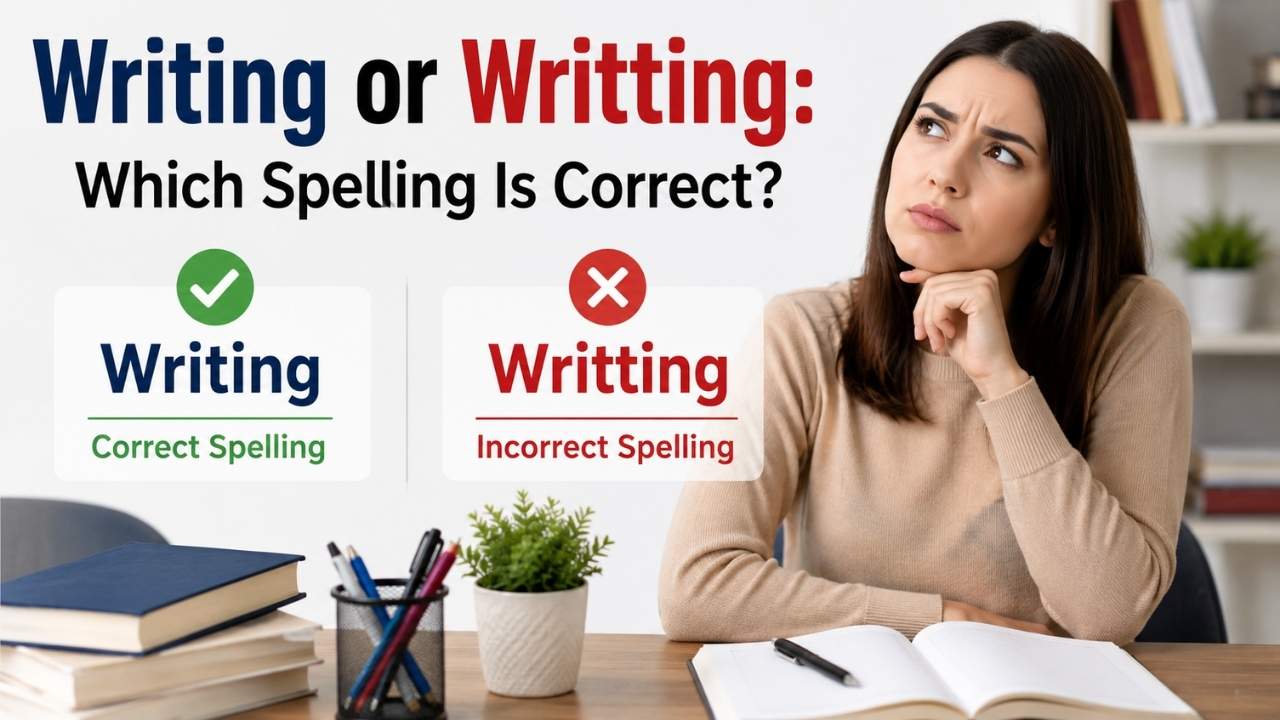
Many people get confused between writing or writting because both words may look correct at first glance. However, the correct spelling is writing, while writting is a common spelling mistake in English. This error often happens when people apply the wrong grammar rules while adding “-ing” to a verb. If you have ever wondered, “Is writting correct?” the simple answer is no.
The word writing comes from the verb “write” and follows standard English spelling patterns. Understanding this small difference can improve your grammar, reduce common typos, and help you write more confidently. In this guide, you will learn the difference between writing and writting, simple spelling rules, sentence examples, and easy memory tricks to avoid this common English error in the future.
Quick Answer
The correct spelling is writing. The word writting is incorrect and does not exist in standard English grammar. When we add “-ing” to the verb “write,” we drop the silent “e” and form writing. Many people make this spelling mistake because they wrongly think the letter “t” should double before adding “-ing.”
Why Is “Writting” Incorrect?

Many people spell writing as writting because they misunderstand common English spelling rules. Some words in English double the final consonant before adding “-ing,” such as “run” becoming “running.” Because of this pattern, learners often think “write” should become “writting.” However, this rule does not apply here.
The verb “write” ends with a silent “e.” In standard English grammar, we usually remove the silent “e” before adding “-ing.” That is why “write” changes to writing, not writting. The extra “t” creates an incorrect form and becomes a common spelling mistake.
This confusion happens often among students, beginner writers, and English learners. Once you understand the rule, you can avoid this common typo and use the correct spelling confidently in everyday writing.
Grammar Rule Behind the Word “Writing”
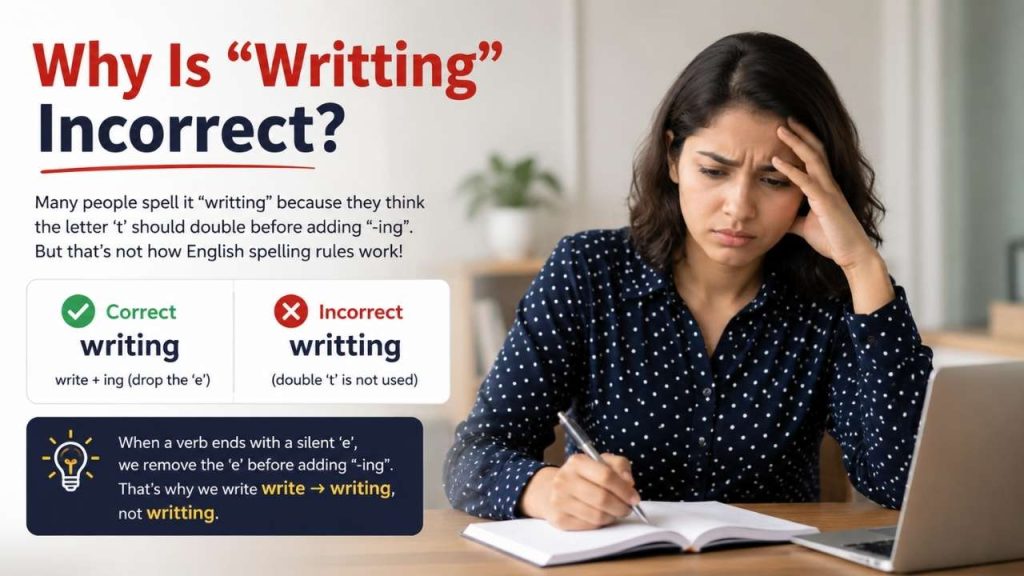
The word writing follows a simple grammar rule in English. When a verb ends with a silent “e,” we usually remove the “e” before adding “-ing.” This spelling pattern appears in many common words. For example, “make” becomes “making,” and “dance” changes to “dancing.” In the same way, “write” becomes writing.
Many learners create the incorrect spelling writting because they confuse it with words that double a consonant. However, “write” does not follow the consonant-doubling rule. The correct form only uses one “t.” Understanding this small rule can improve your English spelling and reduce common grammar errors.
This pattern also helps with other verbs and supports better language learning. Once you learn the rule, you can spell writing correctly without hesitation in emails, essays, or daily communication.
Why Doesn’t Writing Have Double “T”?
Many people ask why writing uses one “t” while words like “running” use two consonants. The answer comes from a common English spelling rule. We usually double the final consonant when a short word ends in a vowel followed by a consonant. For example, “sit” becomes “sitting,” and “run” becomes “running.”
The word “write” works differently because it ends with a silent “e.” English grammar tells us to remove the silent “e” before adding “-ing.” We do not double the “t” because the word does not fit the consonant-doubling pattern. That is why writing is correct and writting is wrong.
Understanding this rule helps English learners avoid common spelling mistakes. It also makes it easier to remember the correct spelling of similar words used in daily writing.
What Does “Writing” Mean?
The word writing has an important meaning in the English language. It refers to the act of creating words, sentences, or ideas on paper or a screen. People use writing to share information, tell stories, send messages, and express thoughts clearly.
In English grammar, the word can act as both a noun and part of a verb phrase. For example, in the sentence “Her writing is clear,” the word works as a noun. In “She is writing a letter,” it becomes part of a verb form.
Good writing helps people communicate better in school, business, and daily life. Students use it for assignments, while professionals use it for emails and reports. Understanding the meaning of writing also helps learners avoid the incorrect spelling writting, which remains a common English typo.
Examples of “Writing” in Sentences
Using writing in sentences can help you remember the correct spelling more easily. Reading examples also improves your understanding of common English grammar patterns. Below are some simple sentence examples that show how people use the word in daily communication.
- She spends two hours writing every evening.
- His writing style sounds clear and professional.
- I enjoy writing stories during my free time.
- The teacher praised her creative writing skills.
- They are writing emails for the school project.
These examples show that writing works in different situations and sentence structures. You can use it when talking about creative work, communication, or academic tasks. Practicing these examples helps English learners avoid the common spelling mistake of using writting instead of the proper word writing.
Common Spelling Mistakes Similar to “Writing”
Many English learners make mistakes similar to writing or writting because English contains many confusing spelling patterns. People often add extra letters or forget important grammar rules while forming new words. These errors usually happen when someone applies the wrong spelling rule to a word.
For example, some people write “comming” instead of “coming” or “makeing” instead of “making.” Others confuse “begining” with the correct spelling “beginning.” These mistakes look small, but they can affect clear communication and professional writing.
Learning common spelling mistakes helps you understand how English words change when adding suffixes like “-ing.” It also improves your confidence in daily communication. Once you practice these patterns, you can avoid many grammar errors and use the correct spelling naturally in essays, emails, and conversations.
Why Do People Misspell “Writing”?
People often misspell writing because English spelling rules can feel confusing. Many learners see words like “running” or “sitting” and think every verb should double the final consonant before adding “-ing.” Because of this pattern, they incorrectly write writting instead of writing.
Pronunciation also causes confusion. When people hear the word aloud, they may assume it needs two “t” letters. Fast typing, lack of proofreading, and limited grammar practice can also create this common spelling mistake. English learners sometimes rely on sound instead of spelling rules, which leads to errors in everyday writing.
Understanding the rule behind writing makes the correct spelling easier to remember. Once you learn when to remove a silent “e” and when to double a consonant, you can avoid many common grammar mistakes in English communication.
How to Remember the Correct Spelling of Writing
A simple memory trick can help you remember the correct spelling of writing. Start with the base word “write.” Before adding “-ing,” remove the silent “e.” This rule changes “write” into writing. You do not need to add another “t.”
Many learners confuse the word because they compare it with words like “running” or “sitting.” However, those words follow a different grammar rule. The word “write” already ends with a silent “e,” so English spelling rules only require dropping the “e” before adding “-ing.”
You can also remember this phrase:
“Drop the e before adding ing.”
Practicing this rule with similar words like “making,” “driving,” and “dancing” can improve your English spelling skills. Over time, correct writing will feel natural and automatic.
Writing vs Written: What’s the Difference?
Many people confuse writing and written because both words come from the verb “write.” However, they have different meanings and uses in English grammar. Understanding this difference can improve your sentence structure and help you avoid common language mistakes.
The word writing usually describes an action happening now or the activity of creating text. For example:
- She is writing a report.
The word written describes something already completed. It often appears with helping verbs such as “has,” “have,” or “was.” For example:
- He has written a letter.
Both words are correct, but they work in different tenses and situations. Learning these forms improves your overall writing skills and helps you communicate more clearly in school, work, and daily conversations.
Is “Writting” Ever Accepted in English?
The word writting is not accepted in standard English grammar or official dictionaries. It is considered a common spelling mistake of the word writing. Many people accidentally use this incorrect spelling because they misunderstand English spelling patterns or type too quickly without checking their work.
Modern dictionaries, grammar tools, and spell checkers all recognize writing as the correct form. They usually mark writting as an error and suggest the proper spelling immediately. This mistake appears often in student assignments, online comments, and informal messages. However, professional writing should always use the correct word.
Learning the rule behind writing helps you avoid this typo in everyday communication. Once you understand how silent “e” verbs work before adding “-ing,” you can spell similar English words correctly with greater confidence and accuracy.
FAQs
Is writting a real word?
No, writting is not a real English word. The correct spelling is writing.
Why is writing spelled with one “t”?
The word follows the silent “e” rule. We remove the “e” from “write” before adding “-ing.”
How do you spell writing correctly?
You spell it as writing, with one “t” and no silent “e.”
What is the rule for adding “-ing”?
For verbs ending with a silent “e,” remove the “e” before adding “-ing.”
Why do some English words double consonants?
Words like “running” double consonants because they follow a different spelling rule based on vowel and stress patterns.
Is writing a noun or a verb?
The word writing can work as both, depending on the sentence structure.
Final Verdict: Writing or Writting?
The final answer is simple: writing is the correct spelling, while writting is incorrect. The word follows a basic English spelling rule where we remove the silent “e” from “write” before adding “-ing.” We do not double the letter “t” in this case.
Many people make this common grammar mistake because English contains different spelling patterns. Words like “running” and “sitting” may confuse learners and create uncertainty. However, once you understand the rule behind writing, the correct form becomes much easier to remember.
Using the proper spelling improves your communication, academic work, and professional writing. It also helps you avoid simple typos in emails, essays, and daily conversations. Practice the examples and grammar tips from this guide, and you will use writing confidently every time.

Fahad is a seasoned English language trainer with a focus on IELTS and TEFL preparation.
He holds a Ph.D. in Applied Linguistics and has over 10 years of teaching experience.
Fahad is passionate about helping students achieve fluency and global opportunities.
His classes combine practical techniques with a supportive, student-first approach.