
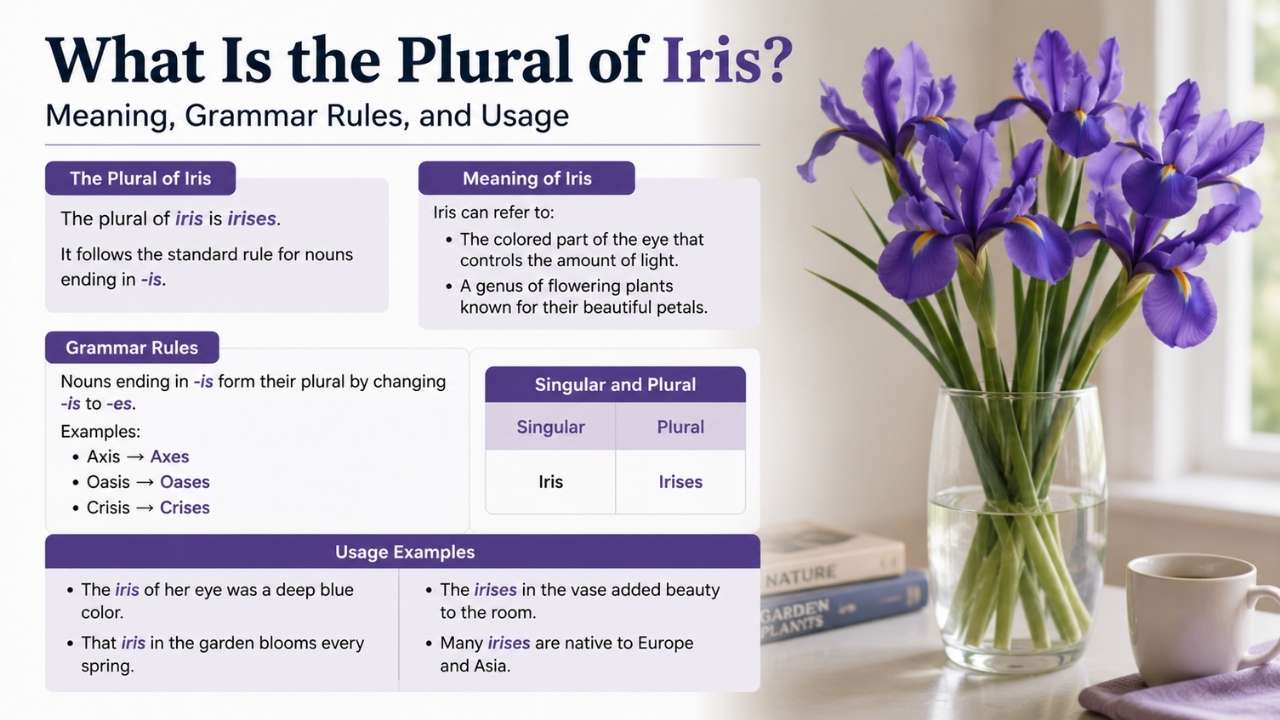
Many learners search for the plural of iris because this word appears in both science and everyday English. It is commonly used in two main contexts: the iris in the eye (anatomy) and the iris flower (botany).
This creates confusion, especially when people see different forms like irises or mistakenly irides. In modern English grammar, the correct plural form of iris is irises, and it follows a simple rule for words ending in -is. However, the word has Greek and Latin origins, which makes its spelling and usage slightly confusing for learners. In this article, we explain the meaning of iris, its dual usage, and the correct grammar rule in simple language.
You will also learn examples, common mistakes, and related grammar patterns so you can confidently use iris plural correctly in writing and speaking.
Quick Answer
The plural of iris is irises. This is the correct and standard form in modern English grammar. Many people search for what is the plural of iris or iris plural form, but the rule is simple and easy to remember. You just add “-es” to words that end in -is, so iris becomes irises.
This rule works for both meanings of iris, whether you talk about the iris in the eye or the iris flower. Some learners get confused and think the plural is irides, but this form is not commonly used in modern English. Dictionaries like Collins, Merriam-Webster, and Britannica confirm that irises is the correct usage.
You should always use irises when talking about more than one eye or flower iris. This keeps your writing correct, simple, and easy to understand in both academic and everyday English contexts.
What Does “Iris” Mean?
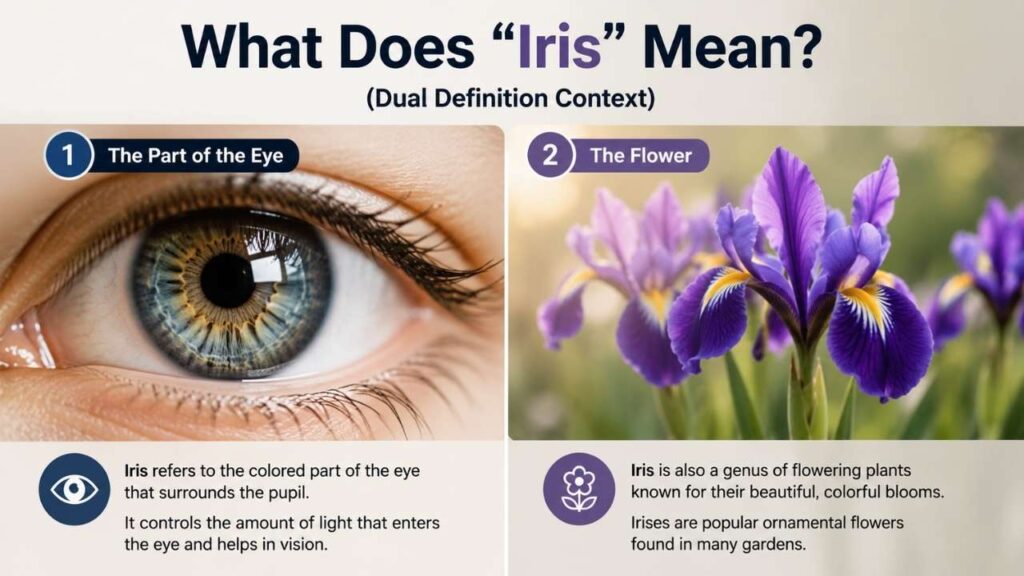
The word iris has two main meanings in English. The first meaning is the iris in the eye, which is the colored part that controls how much light enters the eye. It works with the pupil to help us see clearly in bright or dark places.
This is called the iris eye meaning in anatomy. The second meaning is the iris flower, a beautiful plant known for its colorful petals. In botany, it belongs to the iris plant genus and is often grown in gardens. Both meanings are common in English, so learners often get confused. However, in both cases, the plural form stays the same.
When you talk about more than one eye iris or flower iris, you always use irises. This makes the word easy to remember even though it has two different uses in science and everyday language.
Why the Plural of Iris Is “Irises”
The plural of iris is irises because English follows a simple grammar rule for words ending in -is. In most cases, we change -is to -es to form the plural. This is why iris becomes irises in modern English. This rule helps make the language clear and consistent.
Many learners search for iris plural grammar rules, but the idea is easy once you understand it. Some people think the plural might be irides because of Latin or Greek origins, but modern English does not use that form in everyday writing. Instead, English simplifies the word to irises. You can see this rule in other words like analysis and crisis as well.
So whether you are talking about the iris eye anatomy or the iris flower meaning, the correct plural form will always be irises in both spoken and written English.
Is “Irides” Correct?
Many learners ask if irides is the correct plural of iris. The simple answer is no, it is not used in modern English. The correct form is irises. The confusion comes from old Latin-style grammar, where some words had different plural endings.
This is why some people still think irides plural might be correct. However, modern dictionaries like Merriam-Webster and Collins clearly show that irises is the standard form. You may sometimes see irides in very old texts or rare scientific writing, but it is not common today. Using it in everyday English can look incorrect or outdated.
So when you see questions like is it irises or irides, always choose irises. This applies to both meanings of the word, whether you talk about the iris flower or the iris in the eye. Keeping it simple helps you avoid grammar mistakes.
How to Use “Irises” in Sentences
You can use irises in both science and everyday English once you know the meaning. For example, in gardening, you can say: “The irises in the garden bloom in spring.” This shows more than one flower iris. In medical language, you can say: “The doctor checked the irises of both eyes.” This refers to both eye structures.
These examples help you understand how to use iris in plural form in a sentence correctly. The word is easy to use once you remember the rule. It does not change based on meaning, so both flower and eye use the same plural form. This makes writing simple and clear. Many learners search for iris plural usage, and the key point is always the same: use irises when you talk about more than one.
This keeps your English correct in school, exams, and daily communication.
Related Grammar Rules for Similar Words
The word iris plural form follows a common English pattern for words ending in -is. In many cases, these words change -is to -es in plural form. For example, analysis becomes analyses, crisis becomes crises, and thesis becomes theses. These are called irregular plural nouns, but they follow a clear pattern.
This helps learners understand how English grammar works in similar situations. When you learn plural nouns ending in is grammar rule, you can easily avoid mistakes in writing. The word iris follows a simpler modern rule and becomes irises. This makes it easy to remember compared to more complex scientific words. Learning these patterns helps you improve your grammar step by step. It also helps you understand other academic words in reading and writing.
So once you learn this rule, you can apply it to many similar English words.
Pronunciation and Word Origin of Iris
The word iris pronunciation and meaning is simple in English. It is pronounced as “EYE-ris.” The word comes from Greek mythology, where Iris was the goddess of the rainbow.
This is why the word is linked to color and beauty, especially in the iris flower meaning. Over time, the word moved from Greek to Latin and then into English, keeping its spelling. This history also explains why learners sometimes get confused about its plural form. The iris word origin Greek Latin background makes people expect a different grammar rule.
However, modern English uses a simple form: irises. This shows how language changes over time to become easier. The meaning stays the same, but the grammar becomes simpler. Knowing the origin helps you remember both meanings of iris and use the word correctly in daily English writing and communication.
Common Mistakes with the Word “Iris”
Many learners make simple mistakes when using the word iris plural grammar rule. The most common mistake is writing “iris” instead of irises when talking about more than one. Another mistake is using irides, which is not correct in modern English. Some learners also confuse the two meanings of iris, which leads to wrong usage in sentences.
For example, mixing iris eye definition with flower usage can create unclear writing. Another mistake is forgetting to change the word in plural form in exams or essays. The rule is very simple: just add -es to make it plural. This applies in both eye and flower meanings. Once you remember this, you can avoid most grammar errors. Using irises correctly makes your writing clear, simple, and correct in both academic and everyday English communication.
FAQs
What is the plural of iris?
The plural of iris is irises.
Is “irides” correct?
No, irides is not used in modern English.
Is iris singular or plural?
“Iris” is singular; plural is irises.
What does iris mean in the eye?
It is the colored part that controls light in the eye.
What is an iris flower?
It is a garden plant known for its colorful petals.
Why do we say irises?
Because English adds -es to words ending in -is.
Can I use iris for many?
No, use irises for more than one.
Conclusion
The plural of iris is irises, and this rule stays the same in all contexts. Whether you talk about the iris in the eye or the iris flower, the correct plural form is always irises. Even though some people may see the word irides in old or rare sources, modern English does not use it.
The grammar rule is simple: words ending in -is usually change to -es in plural form. Understanding this helps you avoid common mistakes and write more clearly in English. The word iris also has two meanings, but both follow the same plural rule, which makes it easier to remember.
By using irises correctly in sentences, you improve your grammar accuracy in school, exams, and daily writing. Always stick to the modern rule for clear and correct communication.

Fahad is a seasoned English language trainer with a focus on IELTS and TEFL preparation.
He holds a Ph.D. in Applied Linguistics and has over 10 years of teaching experience.
Fahad is passionate about helping students achieve fluency and global opportunities.
His classes combine practical techniques with a supportive, student-first approach.