
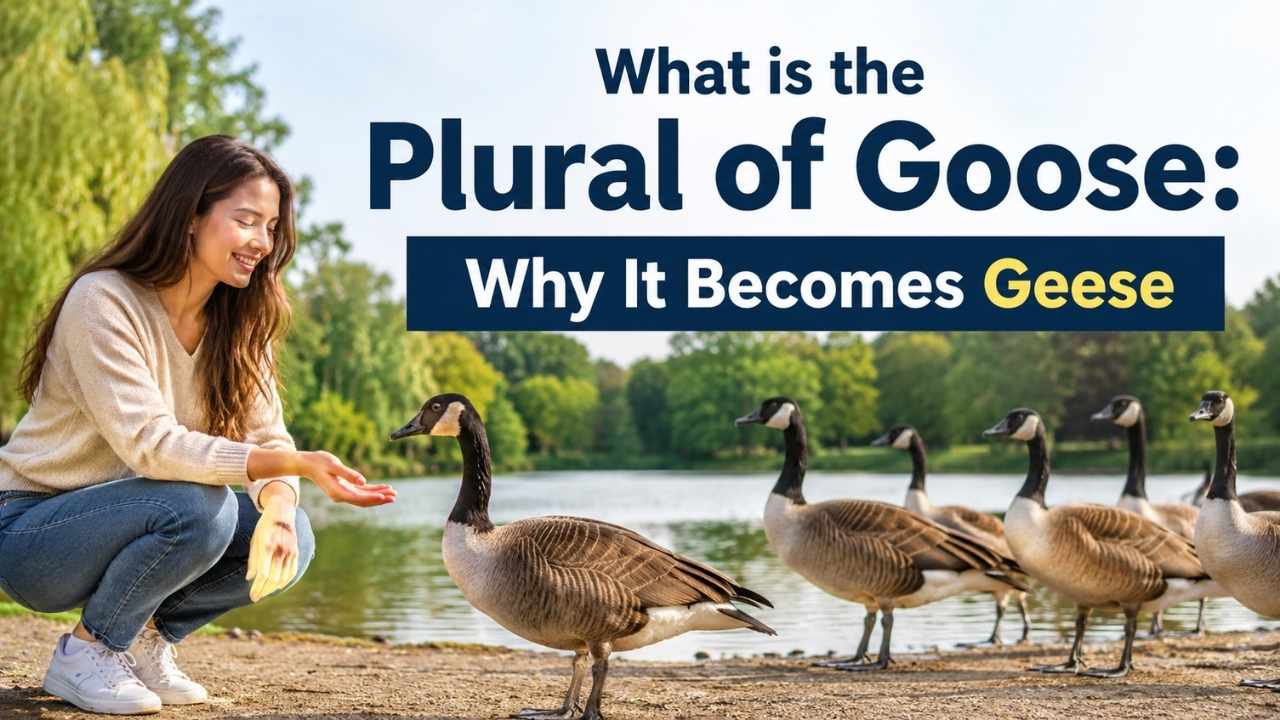
English has many strange plural forms. Some words simply add -s or -es, while others change completely. One classic example is the plural of goose. Many learners expect “gooses,” but standard English uses “geese” instead.
Today, this irregular plural still appears in daily American English. People use it in schools, news articles, texting, nature guides, and casual speech. Because the word breaks normal plural rules, it often confuses both children and adult learners.
Understanding why “goose” changes to “geese” also helps explain how English developed over time. In fact, this small word carries centuries of language history inside it.
Quick Answer
The plural of goose is geese. “Goose” is an irregular noun, which means it does not form its plural by adding -s. Instead, the vowel changes from oo to ee.
TL;DR
- Goose → geese is the correct plural form.
- “Gooses” is usually considered incorrect in standard English.
- The word comes from very old English grammar patterns.
- Americans commonly use “geese” in both speech and writing.
- Similar irregular plurals include tooth/teeth and foot/feet.
- The form survived because English kept older Germanic language patterns.
What Does Goose Mean?
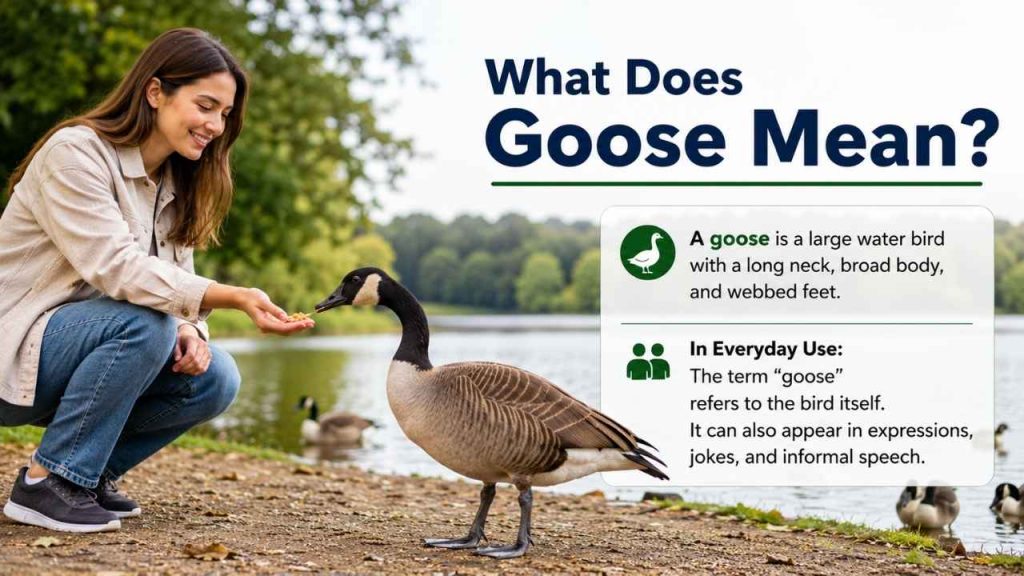
The word goose usually refers to a large water bird with a long neck and broad body. Geese are common in parks, farms, lakes, and wildlife areas across the United States. The term can also appear in expressions, jokes, and informal speech.
In grammar, “goose” is important because it is an irregular noun. Instead of following the normal plural rule, the word changes internally. This pattern surprises many learners because modern English mostly uses simple plural endings.
Goose as a Singular Noun
A singular noun names one person, place, thing, or animal. In this case, “goose” refers to one bird.
For example, someone might say, “A goose crossed the road near the lake.” The noun stays singular because only one bird appears in the sentence.
Geese as the Plural Form
When more than one goose appears, English changes the word to “geese.” The spelling and pronunciation both shift.
For example, “Several geese were flying south for winter.” Here, the noun clearly shows plurality without adding an ending like -s.
Why Goose Changes to Geese
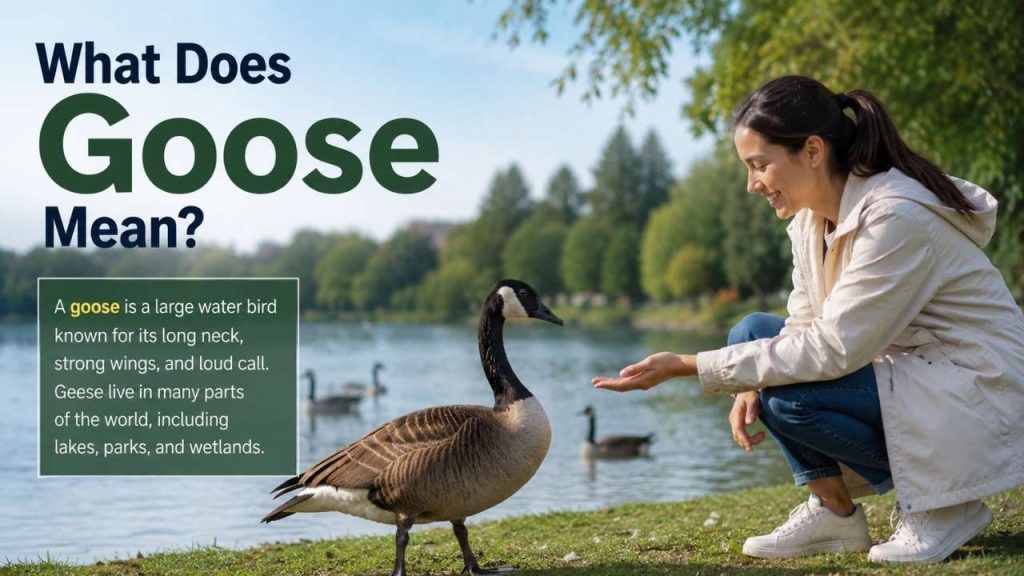
Many English plurals follow predictable rules. However, words like “goose” come from older language systems that used vowel changes instead of endings.
This process is called umlaut. In early Germanic languages, certain sounds inside a word changed when speakers formed plurals. Over time, English lost many of those patterns, but a few survived.
The Old English Origin
In Old English, “goose” appeared as gōs, while the plural form was gēs. The vowel sound shifted naturally through pronunciation patterns used over a thousand years ago.
As English evolved, spelling changed too. Eventually, modern English settled on “goose” and “geese.”
Other Words With the Same Pattern
Several common English nouns still follow this older structure. These include:
| Singular | Plural | Notes |
| Goose | Geese | Animal noun |
| Tooth | Teeth | Body part |
| Foot | Feet | Measurement and body part |
| Mouse | Mice | Animal and computer device |
| Louse | Lice | Insect noun |
These words survived because speakers continued using them frequently. Common words often resist regular grammar changes.
How Americans Use Geese Today
In the United States, “geese” appears in both formal and informal English. Americans use it naturally in conversation, school writing, journalism, and online communication.
People often discuss geese in relation to parks, migration, farming, or weather seasons. Canada geese, for example, are especially common across many American cities and suburbs.
Everyday Spoken English
Americans usually say things like, “The geese are back this spring,” or “Those geese are loud.” The plural sounds completely natural to native speakers.
Children often learn the word early because it appears in school books and nature lessons. However, many young learners still say “gooses” before learning the irregular form.
Digital and Social Media Usage
The word also appears online in memes, jokes, and casual posts. Social media users frequently talk about aggressive park geese or funny wildlife encounters.
Even in texting, people almost always use “geese” correctly. Because the form is so familiar, “gooses” usually sounds childish or humorous.
Common Mistakes With Goose and Geese
Irregular plurals often create confusion because they break expected grammar rules. “Goose” is one of the most commonly misunderstood examples.
The biggest mistake is adding a normal plural ending instead of using the historical plural form.
Why People Say “Gooses”
English learners often assume every noun becomes plural with -s. That logic works for most words, so “gooses” feels reasonable at first.
However, standard English grammar does not accept “gooses” as the normal plural of the bird noun. Dictionaries and style guides consistently prefer “geese.”
Confusion in Writing
Writers sometimes mix up singular and plural agreement. For example, someone may incorrectly write, “The geese is loud.” Since “geese” is plural, the correct verb should be “are.”
Correct agreement matters in both school and professional writing.
Goose in Idioms and Expressions
The word “goose” appears in several English expressions. Some are playful, while others carry older meanings that many people no longer recognize immediately.
These expressions show how deeply the word has entered English culture.
“Wild Goose Chase”
A wild goose chase means a pointless search or a confusing pursuit. Americans still use this phrase often in everyday conversation.
For example, someone might say, “Finding that document became a wild goose chase.”
“Cooked His Goose”
This older idiom means someone caused their own failure or trouble. Although less common today, Americans still recognize it.
For example, “He cooked his goose by missing the deadline.”
British and American Usage Differences
The plural form “geese” remains standard in both American and British English. Unlike some grammar topics, there is little disagreement here.
However, pronunciation and usage style can vary slightly between regions.
Pronunciation Differences
American speakers usually pronounce “geese” with a strong long ee sound. British speakers do the same, though accents may soften or shorten certain vowels.
Still, the plural spelling stays identical across both forms of English.
Formal and Informal Contexts
Both Americans and Britons use “geese” in formal writing, academic texts, and casual speech. No major style guide recommends “gooses” for ordinary use.
However, writers sometimes use “gooses” jokingly for comic effect or character dialogue.
Why Irregular Plurals Survived
English once had many more irregular plural patterns than it does today. Over centuries, most nouns became simpler and adopted -s endings.
Yet some old forms survived because they were extremely common in speech.
Frequency Keeps Words Alive
Words people use often tend to resist change. Since speakers regularly discussed animals, body parts, and daily objects, forms like “geese” and “feet” stayed familiar.
Less common irregular nouns gradually disappeared or became regular.
The Influence of Germanic Roots
English belongs to the Germanic language family. Older Germanic languages used internal vowel shifts much more often than modern English does today.
Because of that history, a few ancient plural patterns still remain in modern American English.
Real-Life Examples of Goose and Geese
Seeing real examples makes irregular plurals easier to remember. Americans use these words naturally in many settings.
The singular form refers to one bird, while the plural form refers to multiple birds.
Singular Examples
“A goose landed near the pond.”
“That goose keeps chasing people.”
“I saw a goose outside my office.”
Plural Examples
“The geese flew south for winter.”
“Several geese blocked traffic.”
“The park geese were surprisingly loud.”
These examples show how naturally the irregular plural fits everyday communication.
Are There Exceptions or Debates?
Most grammar experts agree that “geese” is the correct plural form. However, language always changes over time, and informal speech sometimes creates variations.
Still, standard English remains very stable on this issue.
Is “Gooses” Ever Acceptable?
In rare cases, writers intentionally use “gooses” for humor, storytelling, or playful tone. Children’s books and comedy writing may do this on purpose.
However, standard American grammar still treats “geese” as correct in ordinary communication.
Could the Word Change in the Future?
Language constantly evolves, but extremely common irregular nouns often stay stable for centuries. Because “geese” is deeply established, experts do not expect “gooses” to replace it soon.
Still, modern English continues simplifying many grammar patterns overall.
How the Plural of Goose Helps English Learners
Learning irregular plurals improves both speaking and writing confidence. These words appear often in real communication, so mastering them matters.
The plural of goose is especially useful because it teaches learners that English grammar sometimes follows historical patterns instead of modern logic.
Once learners understand this idea, other irregular nouns become easier too. They begin recognizing families of related patterns instead of memorizing isolated words.
FAQs
Is geese the only correct plural of goose?
Yes. In standard English, “geese” is the accepted plural form. “Gooses” is usually considered incorrect except in jokes or playful writing.
Why doesn’t goose become gooses?
The word comes from an old Germanic grammar system. Instead of adding -s, the vowel changed inside the word.
Is goose an irregular noun?
Yes. “Goose” is an irregular noun because its plural form changes unpredictably.
Do Americans say geese often?
Yes. Americans commonly use “geese” in conversation, writing, news reports, and online posts.
What is the difference between goose and geese?
“Goose” means one bird. “Geese” means more than one bird.
Are there other words like goose and geese?
Yes. Similar examples include foot/feet, tooth/teeth, and mouse/mice.
Is gooses ever used seriously?
Rarely. Most serious writing uses “geese.” “Gooses” usually appears only in humor or intentional nonstandard speech.
Do British people also say geese?
Yes. Both American and British English use “geese” as the standard plural.
Conclusion
The plural of goose is one of English’s best-known irregular forms. Instead of adding -s, the word changes internally to become “geese.” This pattern comes from ancient Germanic language history that still shapes modern English today.
Although the rule seems unusual at first, native speakers use it naturally in everyday communication. Americans hear and say “geese” in parks, schools, online conversations, and daily speech.
Understanding words like “goose” and “geese” also helps learners see how English evolved over time. Once you recognize these older patterns, irregular plurals become easier to remember and use confidently.

Fahad is a seasoned English language trainer with a focus on IELTS and TEFL preparation.
He holds a Ph.D. in Applied Linguistics and has over 10 years of teaching experience.
Fahad is passionate about helping students achieve fluency and global opportunities.
His classes combine practical techniques with a supportive, student-first approach.