Fahad Ali

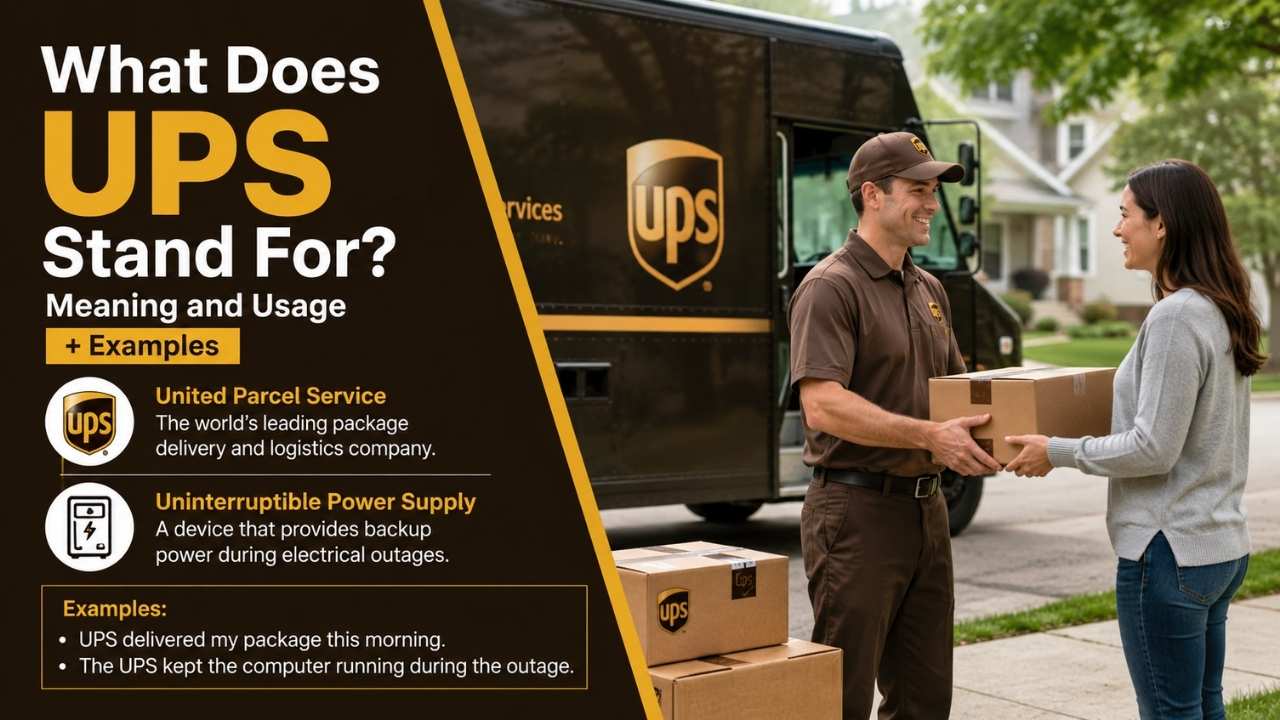
What Does UPS Stand For? Meaning and Usage + Examples 

Many people see the term UPS every day on packages, shipping labels, and delivery trucks. However, not everyone knows exactly what the abbreviation means or how it became such a common part of American English. What Does UPS Stand For? Today, UPS usually refers to United Parcel Service, one of the largest package delivery companies … Read more

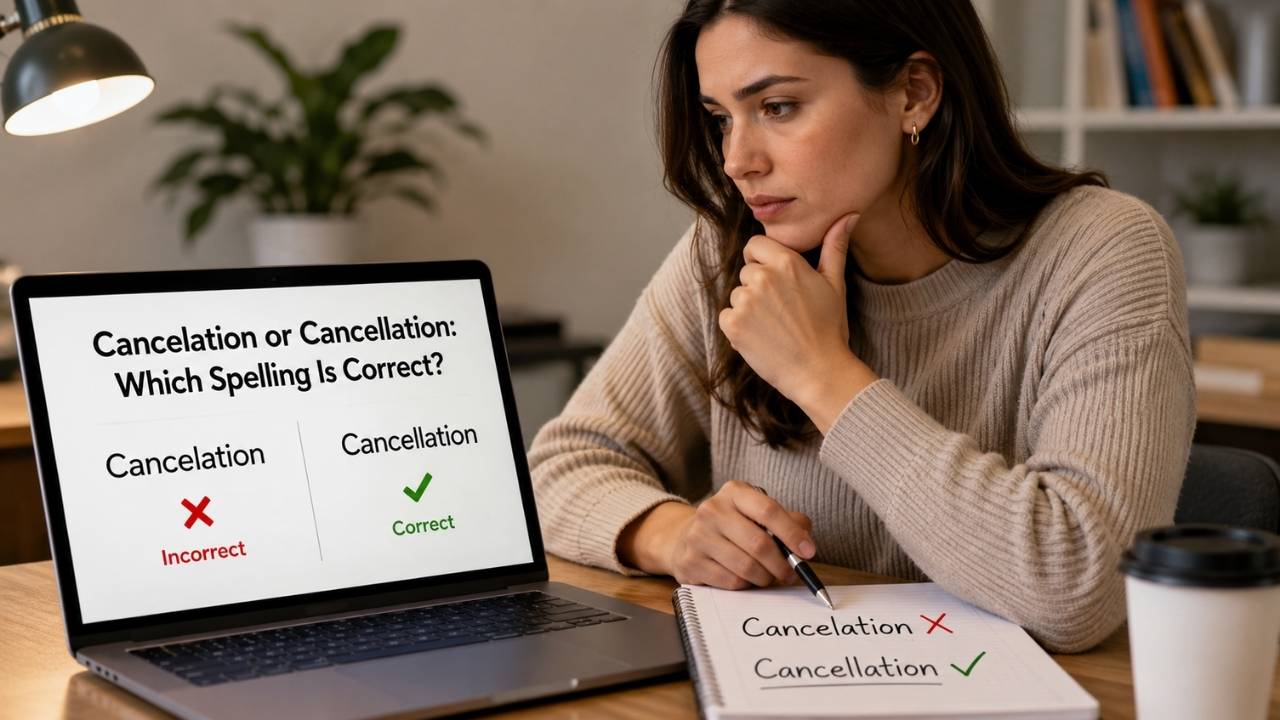
Cancelation or Cancellation: Which Spelling Is Correct?

When people write about a cancelled event, a refunded ticket, or a stopped subscription, they often pause at one word: cancelation. Is it spelled with one “l” or two? This question Cancelation or Cancellation matters because English spelling often changes between regions and writing styles. In daily American English, many people see both forms online. … Read more

What is the Past Tense of Wear: Is it Wore or Worn?

The past tense of wear often confuses English learners and even native speakers. Many people wonder whether they should use wore or worn in a sentence. Because English includes many irregular verbs, the verb wear does not follow the simple “-ed” pattern used by regular verbs. Today, the word appears constantly in everyday American English. … Read more

What is the Plural of Formula: Formulas or Formulae?

The plural of formula often confuses English learners and native speakers alike. Some people write formulas, while others prefer formulae. Both forms appear in books, classrooms, science articles, and everyday writing. However, the choice usually depends on context, tone, and style. In modern American English, one version is far more common in daily communication. Still, … Read more

Plural of Knife: Rules, Meaning, and Examples

The plural of knife is a small grammar topic that often confuses learners and even native speakers. At first glance, you might expect it to follow a simple pattern like most nouns, but English has its quirks. Because English developed from several languages, some plural forms don’t follow the usual “add -s” rule. Instead, they … Read more

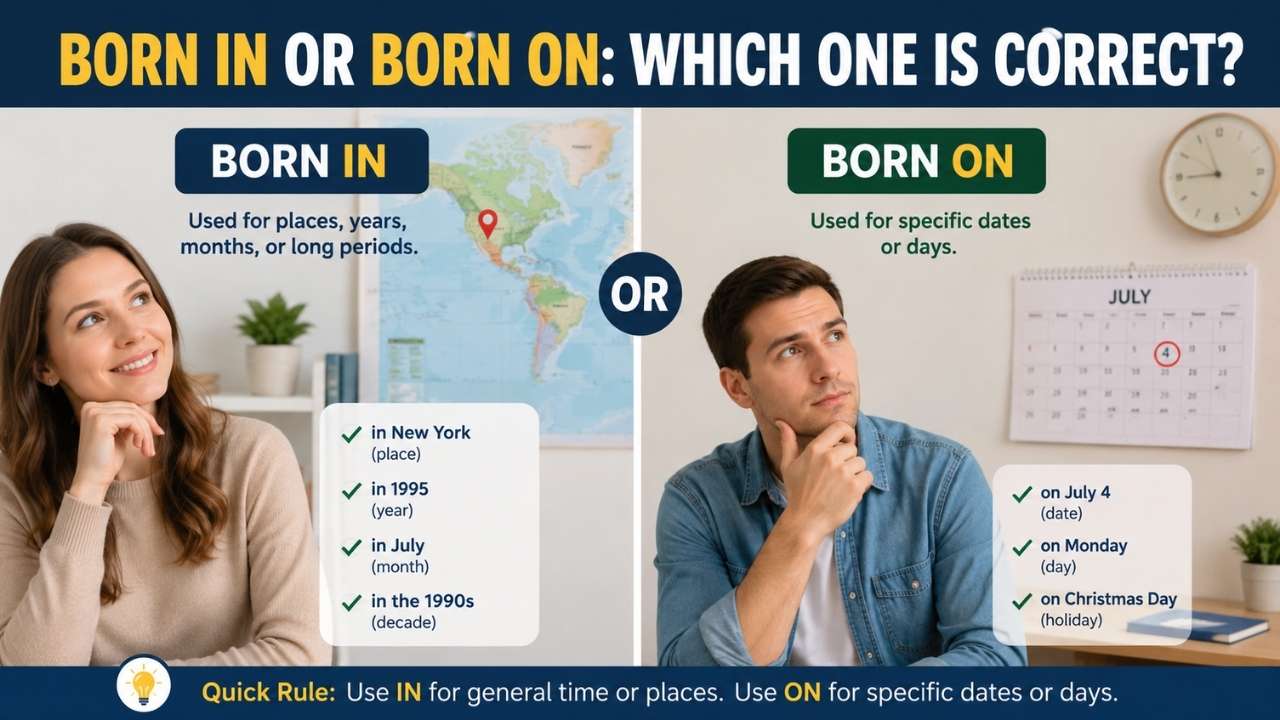
Born In or Born On: Which One Is Correct?

If you’ve ever wondered whether to say “born in” or “born on,” you’re not alone. This small grammar choice can confuse even fluent English speakers, especially in everyday conversations and writing. At first glance, both phrases seem similar. However, they serve different purposes depending on what you’re talking about. Understanding the difference between Born in … Read more

What is the Past Tense of See: Forms, Rules, and Examples

The past tense of see is one of the most common grammar topics in English, yet it still causes confusion for many learners. Even native speakers sometimes mix up its forms, especially when deciding between “saw” and “seen.” Because “see” is an irregular verb, it doesn’t follow the usual “-ed” pattern. Instead, it changes form … Read more

Tart vs Sour: What’s the Difference? Simple Explanation, Examples

Many people confuse tart vs sour, but they are not exactly the same. Both describe an acidic taste, yet they feel different on your tongue. In simple terms, tart taste is mildly sharp and slightly pleasant, while sour taste is stronger, more intense, and sometimes harsh. This is the main difference between tart and sour. … Read more

What is the Past Tense of Put: Meaning, Forms & Examples

The past tense of “put” is very simple, and many learners find it confusing at first. The verb “put” is an irregular verb, which means it does not change in the past form. In both present and past tense, the word stays the same: put. For example, you can say “I put the book on … Read more

What is the Abbreviation for Brazil? Is Brazil Abbreviated as BR or BRA

If you are looking for the abbreviation for Brazil, the most common forms are BR and BRA. These are official Brazil country codes used in different systems worldwide. The Brazil abbreviation BR comes from the ISO 3166-1 alpha-2 code, while BRA is the ISO alpha-3 code. Both help identify Brazil in international communication, trade, and … Read more

Join our email list to receive the latest courses details and blogposts