
Many people confuse tart vs sour, but they are not exactly the same. Both describe an acidic taste, yet they feel different on your tongue. In simple terms, tart taste is mildly sharp and slightly pleasant, while sour taste is stronger, more intense, and sometimes harsh. This is the main difference between tart and sour.
For example, a green apple often tastes tart, while a lemon tastes sour. Both contain acidity, but the taste intensity is different. This is why people ask, “is tart the same as sour?” The answer is no, but they are closely related in the flavor profile.
In this guide, you will learn the tart vs sour meaning, real food examples, and how to easily tell them apart in everyday life.
Quick Answer
The difference between tart and sour comes down to taste intensity. Tart taste is mild, sharp, and slightly pleasant, while sour taste is strong, intense, and mouth-puckering. Both come from acidity, but sour foods have higher acid levels. In simple terms, tart feels lighter, while sour feels stronger on the tongue.
What Does “Tart” Mean?
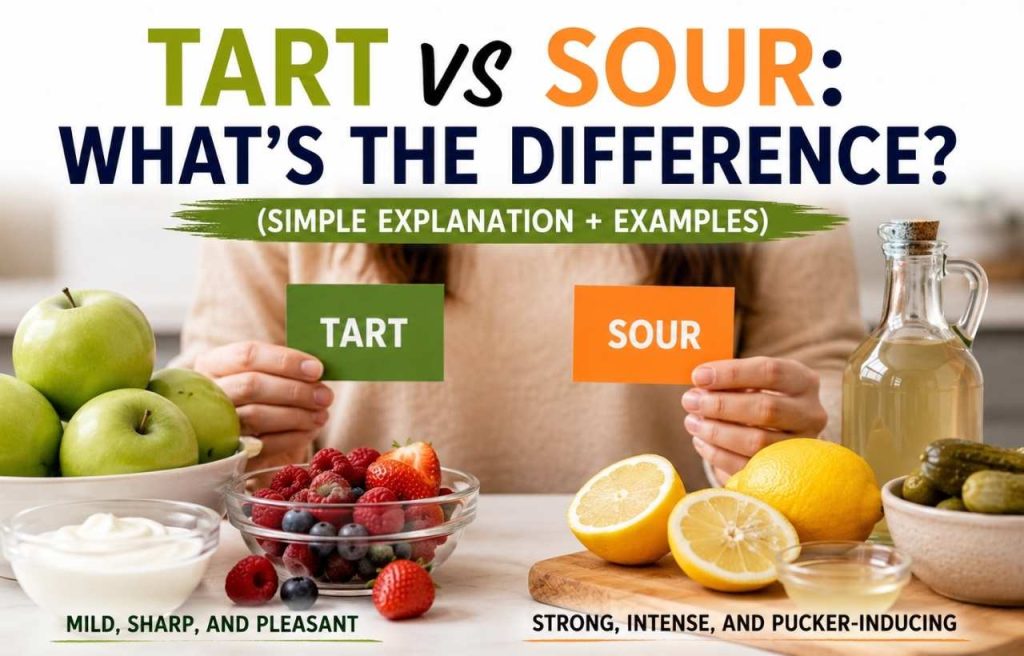
The word tart describes a sharp but pleasant taste. It usually comes from mild acidity, which gives food a fresh and lively flavor. People often use this word in a positive way, especially when talking about fruits and desserts.
For example, green apples, berries, and yogurt are common tart foods. They taste slightly acidic, but not too strong. This balance makes them feel refreshing instead of overwhelming. Many desserts use tart flavors to balance sweetness.
When learning tart vs sour meaning, think of tart as a gentle version of sour. It adds brightness to food without making your mouth pucker too much. That is why chefs often describe dishes as tangy or tart instead of sour.
What Does “Sour” Mean?
The word sour describes a strong and intense acidic taste. It often creates a mouth-puckering feeling, which makes it easy to recognize. Sour foods contain higher levels of acidity, so the flavor feels sharper and more powerful.
Common sour foods include lemons, vinegar, and fermented foods like pickles. These foods have a strong flavor profile that can feel harsh if used in large amounts. People sometimes use “sour” in a negative way, especially when the taste is too strong.
When comparing tart vs sour taste, sour always sits on the stronger side of the taste scale. It dominates the palate and leaves a lasting effect. This is why many people ask, “what does sour taste like?” It feels bold, sharp, and very noticeable.
Tart vs Sour: Side-by-Side Comparison Table
| Feature | Tart | Sour |
| Taste intensity | Mild to moderate | Strong |
| Flavor feel | Sharp but pleasant | Harsh or intense |
| Acidity level | Lower | Higher |
| Common foods | Berries, yogurt | Lemon, vinegar |
This tart vs sour comparison table makes the difference clear. Both tastes come from acidic compounds, but their intensity levels are different. Tart foods feel balanced and refreshing, while sour foods feel bold and powerful.
When you study the difference between tart and sour, this table helps you understand it quickly. It also improves your ability to describe flavor profiles correctly.
Are Tart and Sour the Same?
Many people ask, “is tart the same as sour?” The simple answer is no. However, they are closely related because both come from acidity.
The key difference lies in intensity and feeling. Tart taste feels lighter and more pleasant, while sour taste feels stronger and sometimes overwhelming. You can think of tart as a milder form of sour, but they are not identical.
For example, a slightly unripe fruit may taste tart, while a lemon tastes clearly sour. Both belong to the same taste category, but their flavor intensity separates them.
Understanding this difference helps you describe food more clearly and improves your knowledge of taste comparison in everyday language.
Examples of Tart vs Sour Foods
Real-life examples make it easier to understand tart vs sour. Tart foods include green apples, berries, yogurt, and some desserts. These foods have a light acidic taste that feels refreshing and enjoyable.
On the other hand, sour foods include lemons, vinegar, pickles, and fermented foods. These have a strong acidic flavor that creates a noticeable reaction on your tongue.
When comparing examples of tart foods and sour foods, the difference becomes clear. Tart foods feel balanced, while sour foods feel intense. Some foods may even sit between the two, depending on their acidity level.
Using these examples helps you understand how to tell tart vs sour in daily life without confusion.
What Makes Food Tart or Sour?
The science behind tart vs sour is simple. Both tastes come from acidity, which means the presence of acidic compounds in food. These compounds release hydrogen ions, which trigger your taste receptors.
Foods with low to moderate acidity taste tart. Foods with high acidity levels taste sour. For example, lactic acid in yogurt creates a tart flavor, while citric acid in lemons creates a sour flavor.
This difference in pH level affects how strong the taste feels. Higher acidity leads to a stronger, sharper reaction on your tongue.
Understanding this basic science helps explain the tart vs sour taste difference in a clear and simple way.
When to Use “Tart” vs “Sour” in English
Knowing when to use tart vs sour improves your communication. People often use tart in a positive or neutral way, especially when describing food. It suggests a pleasant and balanced flavor.
In contrast, sour can sound negative or strong, depending on the context. It often describes something too acidic or unpleasant. However, it can still be positive in certain foods like candies.
For example, you might say, “This dessert is tart and refreshing,” but say, “This drink tastes too sour.”
Understanding this difference helps you use the right word in both speaking and writing. It also improves your ability to describe flavor differences clearly.
Common Mistakes People Make
Many people make simple mistakes when using tart vs sour. One common mistake is using sour for all acidic foods. This is incorrect because not all acidic foods are strong enough to be sour.
Another mistake is confusing tangy, tart, and sour. While they are related, each word has a slightly different meaning. Tart feels mild, sour feels strong, and tangy sits somewhere in between.
Some people also ignore context. They may describe a dessert as sour when it actually tastes tart. This creates confusion in communication.
Avoiding these mistakes helps you use accurate flavor descriptions. It also improves your understanding of taste comparison in everyday language.
Tart vs Sour vs Tangy (What’s the Difference?)
The difference between tart, sour, and tangy is subtle but important. Tart taste is mild and slightly sharp. Sour taste is strong and intense. Tangy taste sits in the middle and feels lively with a mix of flavors.
For example, yogurt often tastes tangy because it combines mild acidity with a creamy texture. Green apples taste tart, while lemons taste sour.
When comparing tart vs sour vs tangy, think of a taste spectrum. Tart is light, tangy is balanced, and sour is strong.
Understanding this helps you describe food more accurately. It also improves your ability to explain flavor profiles in a simple and clear way.
FAQs About Tart vs Sour
Is tart a type of sour?
Tart is related to sour, but it is milder and more pleasant.
Which is stronger: tart or sour?
Sour is stronger because it has higher acidity levels.
Can a food be both tart and sour?
Yes, some foods fall between the two depending on their acidity.
What does tart taste like?
It tastes sharp, light, and slightly refreshing.
What does sour taste like?
It tastes strong, intense, and mouth-puckering.
Conclusion
Understanding tart vs sour becomes easy when you focus on taste strength and feeling. Tart taste feels light, sharp, and pleasant, while sour taste feels strong, intense, and sometimes harsh. Both belong to the same acidic flavor group, but they sit at different points on the taste spectrum.
If you still ask, “is tart the same as sour?” the answer is no. Tart is simply a milder version of sour, not a replacement for it.
By learning this difference between tart and sour, you can describe food more clearly, choose better words, and understand flavors with confidence in everyday life.

Fahad is a seasoned English language trainer with a focus on IELTS and TEFL preparation.
He holds a Ph.D. in Applied Linguistics and has over 10 years of teaching experience.
Fahad is passionate about helping students achieve fluency and global opportunities.
His classes combine practical techniques with a supportive, student-first approach.