
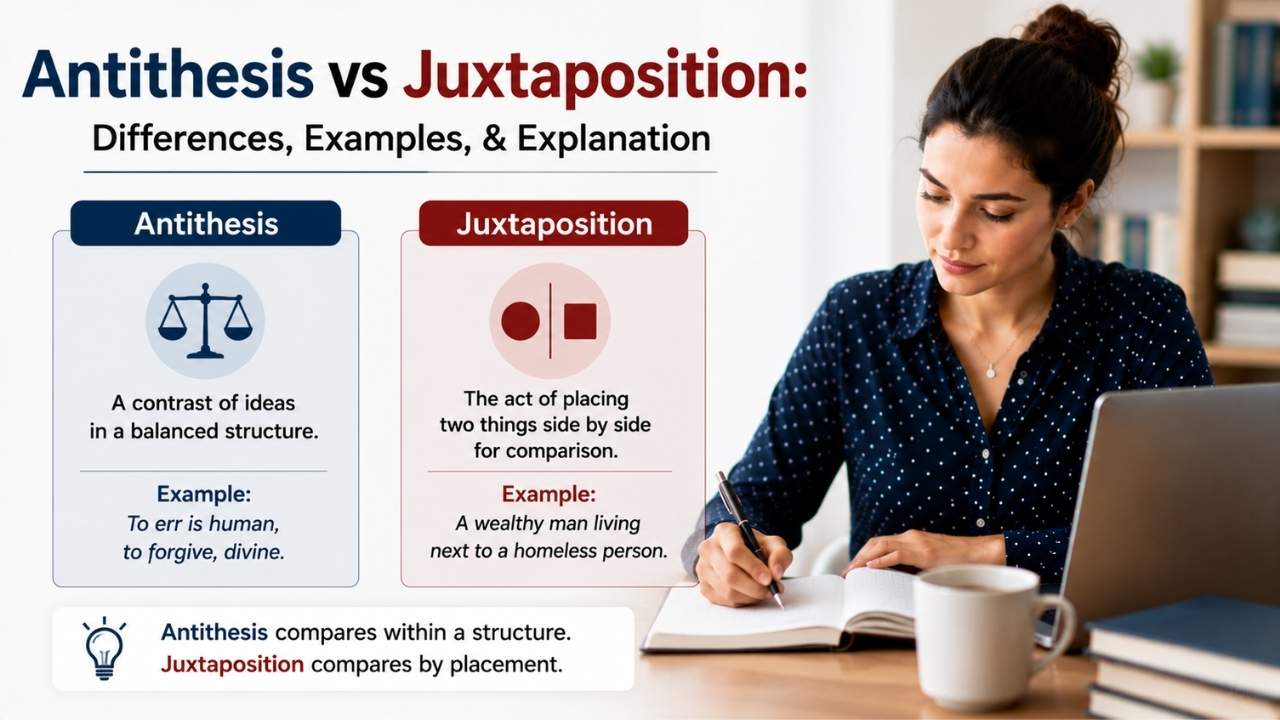
Many students search for the difference between antithesis and juxtaposition because both are used to create contrast in literature. This confusion is very common in exams and writing tasks where learners deal with literary devices difference and rhetorical devices comparison.
Both techniques show contrast, but they do it in different ways. Writers use Antithesis vs Juxtaposition to highlight ideas, emotions, or characters, but the method of contrast is not the same. Antithesis uses a structured opposition in sentences, while juxtaposition places two things side by side for effect.
In this article, we will clearly explain what is antithesis, what is juxtaposition, and the difference between juxtaposition and antithesis in literature. You will also see simple examples, memory tricks, and exam-focused explanations to help you never confuse them again.
Quick Answer
Antithesis uses structured opposite ideas in the same sentence to create strong contrast, like balanced statements in speeches or writing. Juxtaposition places two ideas, characters, or images side by side without a fixed structure to highlight differences. In short, antithesis is sentence-based contrast, while juxtaposition is placement-based contrast in literature and storytelling.
What is Antithesis?
Antithesis is a rhetorical device that uses balanced and opposite ideas in the same sentence or structure. Writers use it to create strong emphasis through contrast. It often appears in speeches, essays, and classic literature where clarity and impact matter.
In simple words, antithesis places two opposing ideas side by side in a structured form. This helps highlight meaning more clearly. For example, “It was the best of times, it was the worst of times” shows clear contrast in writing style.
The main purpose of antithesis is to create a strong emotional or logical impact. It is widely used in rhetorical contrast techniques and helps improve persuasion in writing. Students often study antithesis definition and its examples in literature to understand how writers use balance and opposition effectively.
What is Juxtaposition?
Juxtaposition is a literary device where two ideas, characters, or images are placed side by side to create contrast. Unlike antithesis, it does not require a structured sentence format.
Writers use juxtaposition to highlight differences through placement rather than grammar structure. For example, a rich character living next to a poor one shows clear contrast without directly opposing them in a sentence.
The purpose of juxtaposition is to help readers notice differences and understand deeper meaning in a story. It is common in novels, poetry, and visual storytelling. Many learners search for what is juxtaposition and juxtaposition definition in literature to understand its use in essays and exams.
In simple terms, juxtaposition works through visual or conceptual contrast, making it a powerful tool in storytelling and figurative language devices.
Antithesis vs Juxtaposition — Key Differences
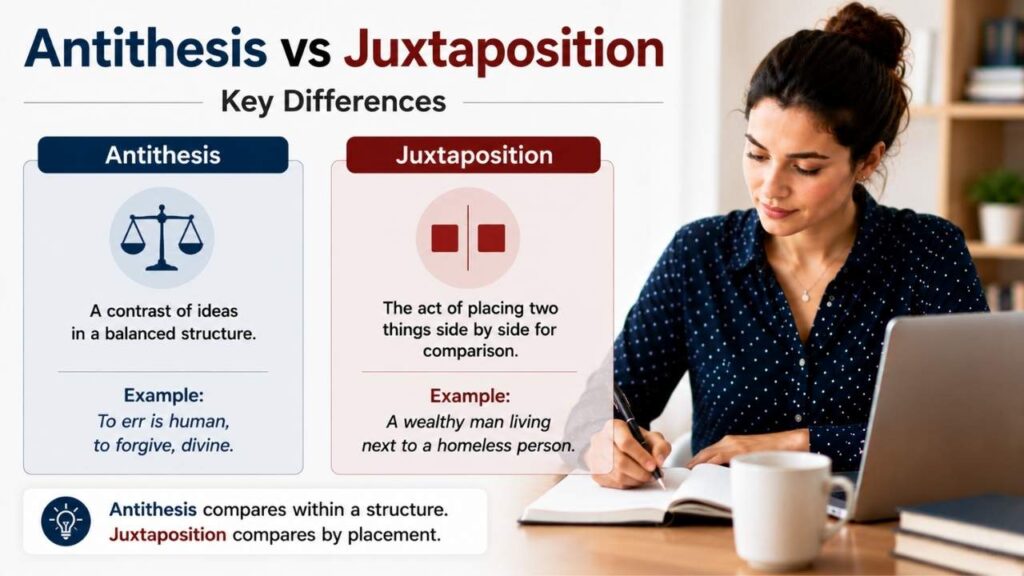
Understanding the difference between antithesis and juxtaposition becomes easier when you compare them directly. Both create contrast, but their method and purpose are not the same.
| Feature | Antithesis | Juxtaposition |
| Definition | Structured opposition in a sentence | Side-by-side placement of ideas |
| Structure | Grammatically balanced | No fixed structure |
| Purpose | Emphasize contrast in ideas | Highlight differences visually or conceptually |
| Usage | Speeches, essays, rhetoric | Literature, storytelling, imagery |
| Effect | Strong emotional impact | Subtle or visual contrast |
This table helps clarify antithesis vs juxtaposition meaning in a simple way. Many students confuse them, but the key difference is structure vs placement. This comparison also helps in AP Lang rhetorical devices comparison and exam preparation.
Side-by-Side Examples of Antithesis and Juxtaposition
Example of Antithesis in Literature
Antithesis often uses strong, balanced sentences. For example:
- “Ask not what your country can do for you, ask what you can do for your country.”
This shows clear opposition in structure, making it a classic example of antithesis in literature.
Example of Juxtaposition in Literature
Juxtaposition focuses on placement rather than sentence balance. For example:
- A wealthy mansion stands next to a small broken hut.
This shows juxtaposition in writing, where contrast comes from positioning rather than grammar.
These examples help students understand antithesis vs juxtaposition examples in sentences and how each device works differently in real writing.
How to Identify Antithesis vs Juxtaposition in Any Sentence
To understand how to tell antithesis from juxtaposition, you can follow a simple method.
First, check if the sentence uses balanced opposite ideas. If yes, it is likely antithesis. Next, check if the contrast comes from placement or description rather than structure. If yes, it is juxtaposition.
Ask these three questions:
- Are the ideas grammatically balanced?
- Is the contrast direct in the sentence?
- Or is the contrast shown through placement or imagery?
This method helps solve confusion in literary devices comparison and improves exam performance. It is especially useful for students who search for difference between rhetorical devices antithesis and juxtaposition in quick revision.
Quick Memory Trick to Never Confuse Them Again
A simple way to remember the difference between antithesis and juxtaposition is:
- Antithesis = Opposites in a sentence (structured contrast)
- Juxtaposition = Things placed side by side (visual contrast)
Think of antithesis as logic-based contrast and juxtaposition as image-based contrast. This trick helps students avoid confusion in exams and writing tasks.
Many learners look for an antithesis vs juxtaposition trick to remember, and this method works well for quick revision.
Common Mistakes Students Make
Students often confuse antithesis and juxtaposition because both show contrast. One common mistake is thinking that all contrast in literature is antithesis. Another mistake is assuming juxtaposition must always use visual images.
Some also mix up rhetorical devices comparison and treat both terms as identical. However, antithesis focuses on structured opposition, while juxtaposition focuses on placement-based contrast.
Understanding these differences helps avoid errors in exams, especially in questions related to literary devices difference or AP Language exam terms.
Conclusion Simple Summary of Antithesis vs Juxtaposition
The difference between juxtaposition and antithesis in literature is simple when broken down clearly. Antithesis uses structured, balanced opposition in a sentence, while juxtaposition uses side-by-side placement to create contrast.
Both are powerful literary devices that help writers express meaning, emotion, and contrast effectively. If you understand the structure and purpose of each, you will never confuse them again.
In short:
- Antithesis = structured contrast
- Juxtaposition = positional contrast
This clear understanding improves writing, reading comprehension, and exam performance in topics related to rhetorical devices and literary techniques.
FAQs
What is the main difference between antithesis and juxtaposition?
Antithesis uses structured opposite ideas in a sentence, while juxtaposition shows contrast by placing two things side by side.
Are antithesis and juxtaposition the same?
No, antithesis is a rhetorical structure, while juxtaposition is a literary placement technique.
What is antithesis in simple words?
It is the use of opposite ideas in a balanced sentence to create strong emphasis.
What is juxtaposition in simple words?
It is when two ideas or images are placed together to show contrast.
Can antithesis be a type of juxtaposition?
No, they are related but not the same or nested concepts.
Where is antithesis commonly used?
It is often used in speeches, essays, and persuasive writing.
Where is juxtaposition commonly used?
It is common in literature, poetry, and visual storytelling.
Why are they often confused?
Because both are contrast-based literary devices.
Which is easier to identify?
Juxtaposition is usually easier because it relies on visual or contextual contrast.
How can I remember the difference easily?
Think: Antithesis = structured contrast, Juxtaposition = side-by-side contrast.
Conclusion
Understanding the difference between antithesis and juxtaposition becomes simple once you focus on structure and purpose. Antithesis creates clear, balanced opposition within a sentence, while juxtaposition creates contrast by placing two ideas side by side without needing grammatical balance.
Both are powerful literary devices used in writing, literature, and speeches to highlight meaning and improve impact. Antithesis strengthens arguments through structured rhetorical contrast, while juxtaposition enhances storytelling through visual or conceptual contrast.
In short, antithesis works through sentence structure, and juxtaposition works through placement and context. Once you recognize this key difference, you can easily identify and use both correctly in exams, essays, and literary analysis.

Fahad is a seasoned English language trainer with a focus on IELTS and TEFL preparation.
He holds a Ph.D. in Applied Linguistics and has over 10 years of teaching experience.
Fahad is passionate about helping students achieve fluency and global opportunities.
His classes combine practical techniques with a supportive, student-first approach.