
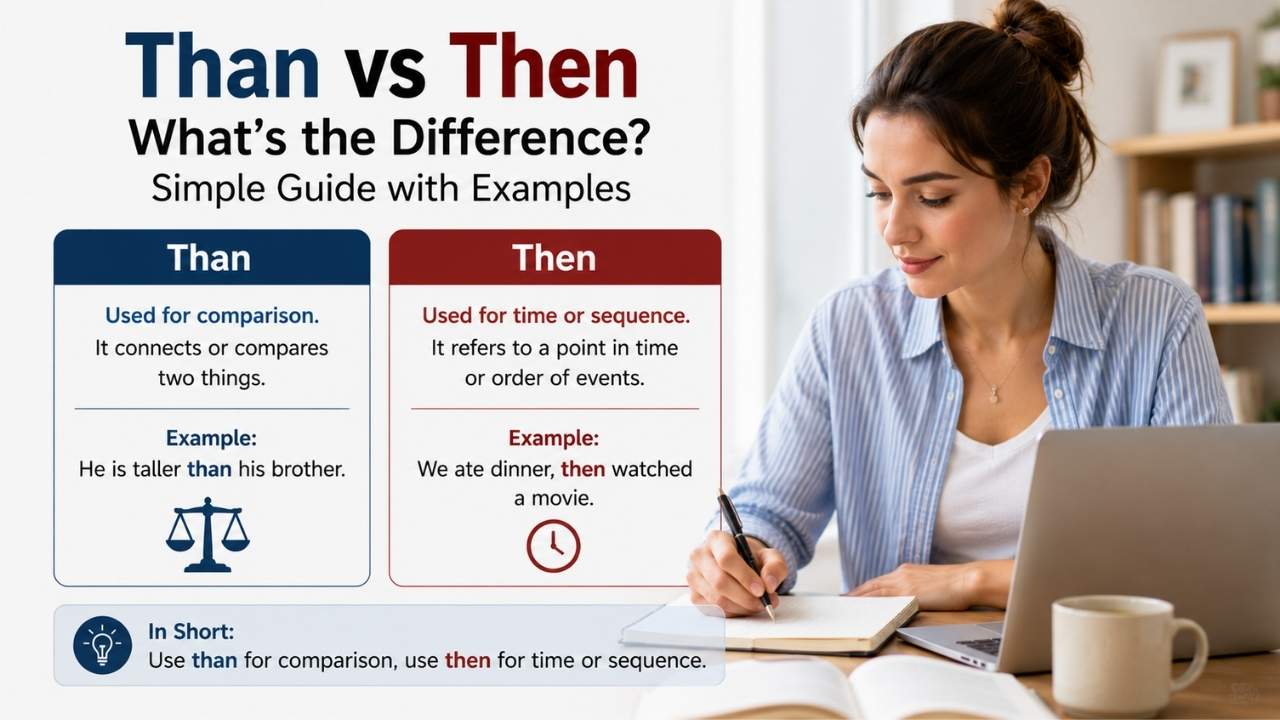
Many people confuse than and then because they look and sound similar, but they have completely different roles in English grammar. This confusion often appears in everyday writing, especially when learners search for than vs then, difference between than and then, or when to use than and then correctly.
The simple truth is: “than” is used for comparison, while “then” is used for time or sequence. Once you understand this rule, most mistakes disappear quickly. For example, saying “She is taller than her brother” shows comparison, while “We ate dinner and then went home” shows order in time.
In this guide, you will learn than meaning vs then meaning, clear usage rules, real examples, and easy tricks to remember them. This will help you avoid common grammar mistakes in both writing and speaking.
Quick Answer
The difference between than and then is simple. Than is used for comparison words, while then is used for time words or sequence words in a sentence. Many learners search for what is the difference between than and then or than vs then meaning, and the answer stays the same in every case.
For example:
- She is smarter than her friend. (comparison)
- We finished lunch, and then we left. (sequence)
This quick rule helps you understand how to use than and then correctly in most situations. If you remember this one idea, you will avoid most grammar mistakes with than vs then in your writing.
Why Do People Confuse Than and Then?
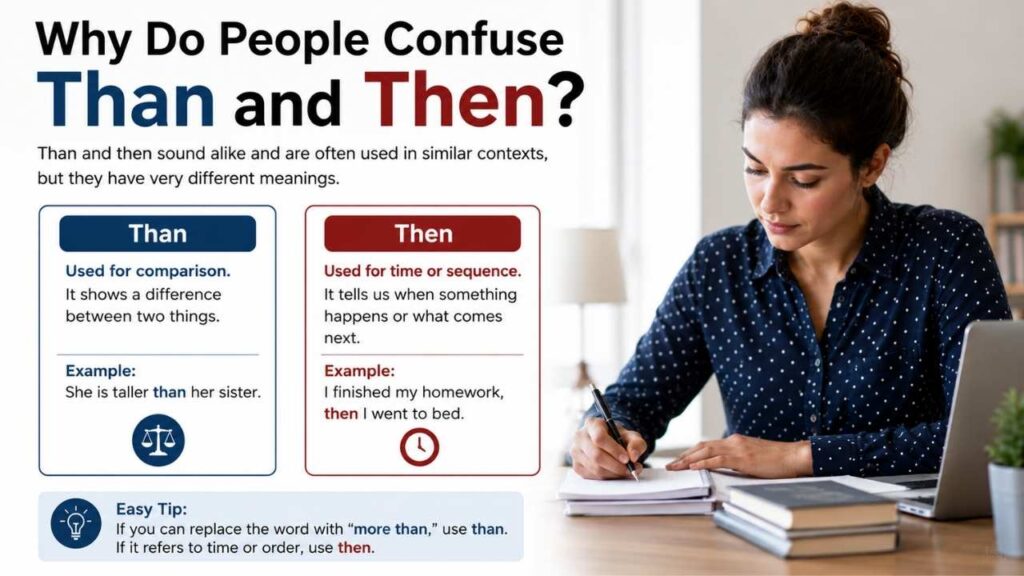
People often confuse than vs then because both words look similar and are used in fast speech. When spoken quickly, they almost sound the same, which creates errors in writing. This is why learners often search for why do I confuse than and then or common mistakes with than and then.
Another reason is lack of practice with English grammar usage rules. Many learners do not clearly understand comparison words vs time words, so they mix them up in sentences.
For example:
- Incorrect: I am better then him
- Correct: I am better than him
This confusion also appears in writing mistakes, especially in emails, essays, and social media posts. Once you understand the rule, your writing becomes clearer and more professional.
What Does “Than” Mean?
Than is used to show comparison between two things. It is one of the most important comparison words in English grammar. When you search for than meaning in grammar, it always refers to differences between people, objects, or ideas.
We use than in sentences where we compare size, speed, quality, or quantity. It is commonly used in both casual and formal writing, including academic writing and business writing.
Examples:
- This phone is cheaper than that one.
- She runs faster than her brother.
- I prefer tea than coffee.
You may also see than used in phrases like “rather than” or “more than”, which are common in English writing. Understanding this helps you avoid grammar mistakes involving than vs then.
What Does “Then” Mean?
Then refers to time, sequence, or order of events. It is often used as a time word or transition word in English sentences. When people search then meaning in a sentence, they usually want to understand actions happening step by step.
We use then when talking about what happens next or what happened in the past sequence.
Examples:
- We had breakfast, and then we went to school.
- Back then, life was simpler.
- If you study hard, then you will pass.
In grammar, then acts as a time connector, helping organize ideas clearly. It is also used in if-then statements, which are common in logic and academic writing. This makes it an important word in both daily communication and structured writing.
Than vs Then: Side-by-Side Comparison Table
| Feature | Than | Then |
| Meaning | Comparison | Time or sequence |
| Function | Shows difference | Shows order |
| Type | Conjunction / preposition | Adverb |
| Example | She is taller than me | We ate, and then left |
This table helps you quickly understand difference between than and then with examples. Many learners prefer this format because it clearly separates comparison vs sequence words in English grammar. If you are unsure, replace the word mentally and see if it shows comparison or time. This simple trick reduces common grammar mistakes.
Easy Trick to Remember the Difference
A simple memory trick helps you avoid confusion between than vs then.
- Than = Comparison (A for Against)
Think of comparing two things side by side. - Then = Time (E for Events)
Think of events happening one after another.
This method is widely used in English writing tips because it is easy to remember. Many learners search for how to remember than and then easily, and this trick works instantly.
Example:
- I am taller than you (comparison)
- We ate dinner, and then watched a movie (sequence)
Using this trick regularly will help you avoid writing mistakes involving than and then in daily communication.
Common Mistakes to Avoid
One of the most common grammar mistakes in English writing is mixing up than vs then. This usually happens when learners do not focus on meaning.
Incorrect examples:
- I would rather go then stay
- She is better then her sister
Correct examples:
- I would rather go than stay
- She is better than her sister
Another mistake is using then instead of than in comparisons, especially in fast typing or informal writing. These errors often appear in emails, essays, and social media posts.
To avoid mistakes, always check:
- Is it a comparison? → use than
- Is it a time or sequence? → use then
This rule helps fix most then vs than grammar errors quickly.
Mini Practice Quiz
Try these sentences to test your understanding of than vs then examples:
- She is taller ___ her friend.
- We ate dinner and ___ went home.
- I would rather read ___ watch TV.
- Back ___, things were different.
- This exam is easier ___ the last one.
Answers:
- than
- then
- than
- then
- than
FAQs
Is it “better than” or “better then”?
It is always better than because it shows comparison.
When should I use than?
Use than when comparing two things, people, or ideas.
When should I use then?
Use then when talking about time, order, or sequence.
Why do people confuse than and then?
They look similar, sound similar, and are often misused in fast writing.
Is than a conjunction?
Yes, than can act as a conjunction or preposition depending on the sentence.
Can “than” and “then” be used in formal writing like essays or reports?
Yes, both words are commonly used in formal writing, academic writing, and business writing, but only in the correct context. Use than when making comparisons, and use then when showing time order or sequence. Incorrect usage is considered a clear grammar mistake, especially in professional documents.
What is a simple rule to decide between “than” and “then”?
A very simple rule is:
- If you are comparing two things → use than
- If you are talking about time or order → use then
Many learners searching for how to use than and then correctly rely on this rule because it works in almost every situation and reduces common English grammar errors.
Are “than” and “then” part of speech the same?
No, they are different. Than is mainly used as a conjunction or preposition, while then is an adverb. This difference is important in English grammar usage rules, especially when analyzing sentence structure in academic writing or exams.
What is the best way to stop mixing up “than” and “then”?
The best way is consistent practice with examples and sentence correction exercises. You can also use memory tricks like “than = comparison” and “then = time/events”. Reading and writing regularly helps reduce than vs then mistakes, especially in emails, essays, and daily communication.
Conclusion
The difference between than vs then is simple once you focus on meaning instead of appearance. Than is always used for comparison, while then is used for time, sequence, or order of events. This single rule helps you avoid most common grammar mistakes in English writing.
Many learners struggle with than meaning vs then meaning, but with practice, the confusion disappears. If a sentence compares two things, choose than. If it explains what happens next, choose then. This small habit improves clarity in academic writing, business emails, and everyday communication.
To master when to use than and then correctly, keep practicing with examples and quick checks before writing. Over time, your brain will automatically choose the right word. With consistent use, you will stop making than vs then errors and write with more confidence and accuracy.

Fahad is a seasoned English language trainer with a focus on IELTS and TEFL preparation.
He holds a Ph.D. in Applied Linguistics and has over 10 years of teaching experience.
Fahad is passionate about helping students achieve fluency and global opportunities.
His classes combine practical techniques with a supportive, student-first approach.