
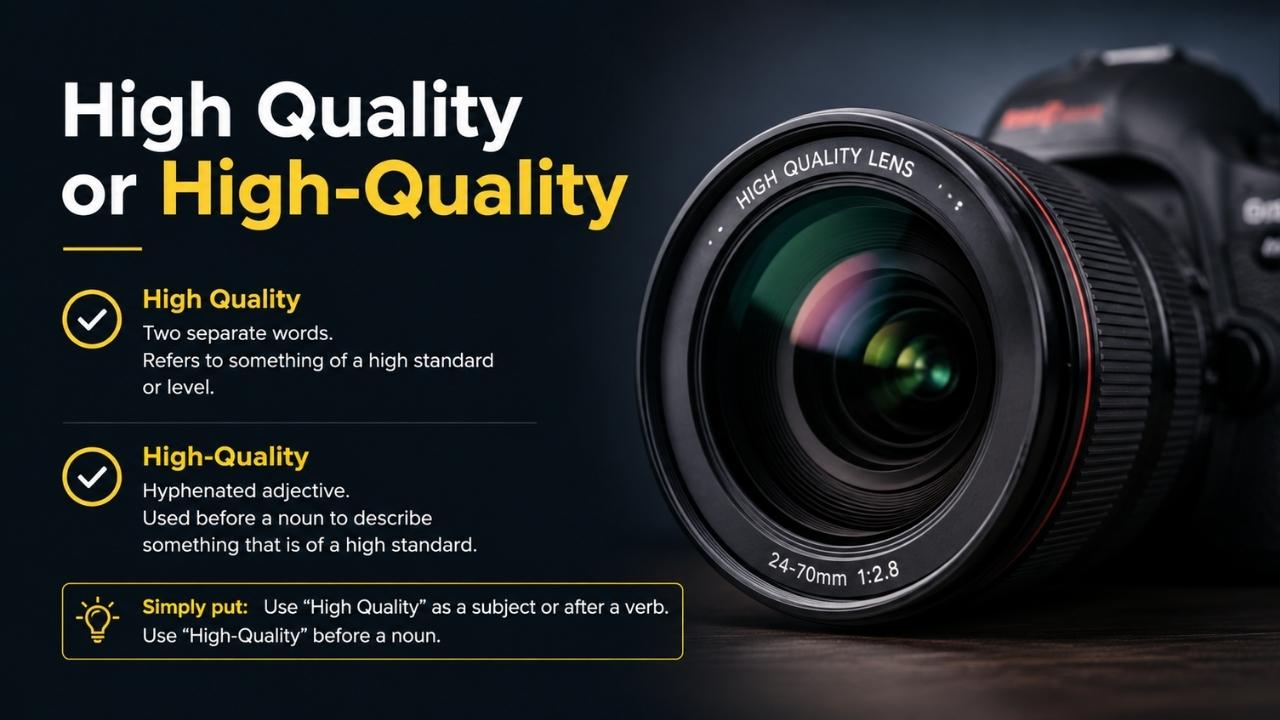
The terms high-quality and high quality often confuse writers, students, and even professionals. Many people are unsure when to use the hyphen and when to leave it out. This small grammar difference can change how clear and correct your sentence feels. In simple terms, both forms relate to high-quality meaning, which describes something that is excellent, well-made, or superior in standard.
However, the real issue is not just meaning—it is usage and grammar rules. In English, word structure depends on position in a sentence, especially when using compound adjectives like high-quality work or high quality work. Understanding this helps you avoid common mistakes and improve writing clarity.
In this guide, you will learn the high-quality definition, correct grammar rules, and real examples so you can confidently use both forms in writing without confusion.
Quick Answer
High-quality and high quality both are correct, but used differently. Use high-quality (with hyphen) before a noun, like high-quality content or high-quality work. Use high quality (without hyphen) after a verb, like The content is high quality. The difference depends on sentence position, not meaning. This simple rule helps you write clear and correct English.
What Does “High-Quality” Mean?

The term high-quality means something that is made or done to a very good standard. It is used to describe work, products, or services that are better than normal in performance, design, or value. For example, high-quality content, high-quality work, or high-quality products all refer to something reliable and well made.
In simple words, when we say something is high-quality, we mean it is not average—it is carefully made and meets a strong standard. You may also see people searching for high-quality meaning or high-quality definition, especially when learning English.
Some common synonyms include excellent quality, premium, and superior. These words help explain the same idea in different ways. Understanding this meaning is important before learning grammar rules, because it helps you use the word correctly in real writing situations like business, education, or everyday communication.
High Quality vs High-Quality – Key Difference Explained
The main difference between high quality and high-quality is how they are used in a sentence. Both are correct, but they are not used in the same way.
We use high-quality (with a hyphen) when it comes before a noun. For example: high-quality content, high-quality work, or high-quality design. Here, it works as a compound adjective that describes a noun.
We use high quality (without hyphen) when it comes after a verb or stands alone. For example: This product is of high quality. In this case, it acts like a noun phrase, not a single description word.
Many learners search high-quality vs high quality difference because the rule is simple but often confusing. The key idea is position: before a noun use hyphen, after a verb do not. This rule helps you avoid grammar mistakes in writing.
Grammar Rule Behind Hyphenation
The main grammar rule behind high-quality hyphen usage is called the compound adjective rule. When two words work together to describe a noun, we often join them with a hyphen to make the meaning clear.
For example, in high-quality content, the words “high” and “quality” work together as one idea. The hyphen shows that they should be read as a single unit, not separate words.
Without the hyphen, sentences can become slightly unclear or harder to read. That is why grammar guides suggest using hyphens when words come before a noun.
However, if the phrase comes after the verb, like “The content is high quality,” no hyphen is needed. This is because it is no longer acting as a single describing word.
This rule is widely used in English writing, style guides, and formal communication to improve clarity and readability.
When to Use “High Quality”
We use high quality (no hyphen) when the phrase is not directly placed before a noun. In this case, it usually comes after a verb and works like a description or noun phrase.
For example, we say: “This product is of high quality.” or “The service is high quality.” Here, high quality is not acting as one word. It is simply describing something after the sentence is formed.
This usage is common in everyday English and is considered fully correct grammar. Many people search when to use high quality without hyphen because they are unsure about placement rules.
The key point is simple: if the phrase stands alone or comes after verbs like is, are, was, you do not need a hyphen. This keeps your writing natural and easy to understand in both formal and informal situations.
When to Use “High-Quality”
We use high-quality (with a hyphen) when it comes directly before a noun. In this case, it works as a compound adjective, meaning two words join to describe one thing.
For example, we say: high-quality content, high-quality work, or high-quality design. Here, the hyphen helps the reader understand that both words are connected.
Without the hyphen, the sentence can feel less clear or slightly confusing. That is why grammar rules recommend using it before nouns.
Many learners search when to use high-quality in a sentence because this rule is very common in writing, especially in blogs, business content, and academic work.
The simple rule is: if the phrase comes before a noun, always use the hyphen. This makes your writing cleaner, more professional, and easier to read for all audiences.
Style Guide Differences
Different style guides explain hyphen rules in slightly different ways, but the meaning stays the same. In most cases, both AP Style and Chicago Manual of Style agree that compound adjectives like high-quality should be hyphenated before a noun.
For example, both guides support writing high-quality content instead of high quality content when used before a noun. This helps improve clarity and readability in professional writing.
However, some modern writing styles are becoming more flexible. In informal content, writers sometimes skip hyphens if the meaning is still clear. But in formal writing, using hyphens is still the safer choice.
In British and American English, the rule is mostly the same. The difference is small and does not change meaning.
Overall, style guides focus on one goal: making writing easy to understand and reducing confusion for readers.
Why Even Native Speakers Get This Wrong
Even native English speakers sometimes make mistakes with high-quality vs high quality. The main reason is that spoken English does not clearly show hyphens. People hear the same phrase in conversation, so they do not always think about grammar rules.
Another reason is fast digital writing. On social media, emails, and chats, people often skip hyphens to save time. This makes the habit of ignoring grammar more common.
Many users also search is high quality correct grammar because they see different versions online and get confused about which one is right.
The truth is, both forms are correct, but they depend on sentence position. Before nouns, use high-quality. After verbs, use high quality.
This small rule is easy to forget, but with practice, it becomes natural and helps improve writing clarity in both formal and casual communication.
Common Mistakes with “High Quality / High-Quality”
One common mistake is using high quality before a noun, such as writing “high quality content” instead of “high-quality content.” This can make writing less clear and less professional.
Another mistake is overusing hyphens in all situations. For example, writing “The content is high-quality” is incorrect because the phrase comes after a verb and does not need a hyphen.
Many learners also mix both forms in the same paragraph, which creates inconsistency in writing style. This is often seen in blogs and student essays.
People also search grammar rules for high-quality usage because these small errors are very common.
The simple solution is to remember one rule: use hyphen before nouns and remove it after verbs. This keeps your writing clean, correct, and easy to understand for readers in any context.
Practical Examples for Better Understanding
Let’s understand high-quality usage with simple examples. In business writing, we say: high-quality services, high-quality reports, or high-quality design. Here, the hyphen is used because the phrase comes before a noun.
In everyday sentences, we say: This service is high quality or The work is high quality. In these cases, there is no hyphen because the phrase comes after the verb.
In academic writing, you may see: high-quality research papers or high-quality studies. These examples follow the same grammar rule.
In marketing content, phrases like high-quality content writing are very common because they clearly describe strong and valuable writing.
These examples help you understand how flexible the phrase is. The meaning stays the same, but placement decides whether a hyphen is needed or not. This makes your writing more natural and grammatically correct.
Quick Grammar Checklist
Here is a simple high-quality grammar checklist to help you use it correctly every time.
First, check where the phrase appears in the sentence. If it comes before a noun, always use a hyphen. For example: high-quality content, high-quality work, or high-quality product.
If the phrase comes after a verb, do not use a hyphen. For example: The content is high quality or The product is high quality.
Second, ask yourself if the words are working together as one idea. If yes and they describe a noun, then use high-quality.
Many people search when to use high quality vs high-quality because they forget this simple rule.
To make it easier, just remember: before noun = hyphen, after verb = no hyphen. This quick rule helps you avoid mistakes and write clearly in any situation.
FAQs
What is the meaning of high-quality?
High-quality means something that is made or done to a very good standard, better than average in value, design, or performance.
What is the difference between high quality and high-quality?
Use high-quality before a noun, like high-quality content. Use high quality after a verb, like The content is high quality.
Is high quality grammar correct?
Yes, high quality is correct when used after verbs or as a noun phrase.
When should I use a hyphen in high-quality?
Use a hyphen when the phrase comes before a noun to form a compound adjective.
Why is high-quality hyphenated?
The hyphen connects words to make the meaning clear and easy to read.
Can I use high-quality in formal writing?
Yes, it is commonly used in academic, business, and professional writing.
What is high-quality content writing?
It means creating clear, useful, and well-structured content that meets user needs and SEO standards.
Conclusion
Understanding high-quality vs high quality is simple once you know the basic grammar rule. Both forms are correct, but their use depends on sentence structure. Use high-quality (with a hyphen) when it comes before a noun, such as high-quality content or high-quality work. Use high quality (without a hyphen) when it comes after a verb, such as The content is high quality.
Many people get confused because the meaning stays the same, but placement changes the form. This small rule helps improve clarity, readability, and writing quality. Whether you are writing blogs, academic work, or business content, using the correct form makes your writing look more professional and accurate. Just remember: before a noun use a hyphen, after a verb do not.

Fahad is a seasoned English language trainer with a focus on IELTS and TEFL preparation.
He holds a Ph.D. in Applied Linguistics and has over 10 years of teaching experience.
Fahad is passionate about helping students achieve fluency and global opportunities.
His classes combine practical techniques with a supportive, student-first approach.