
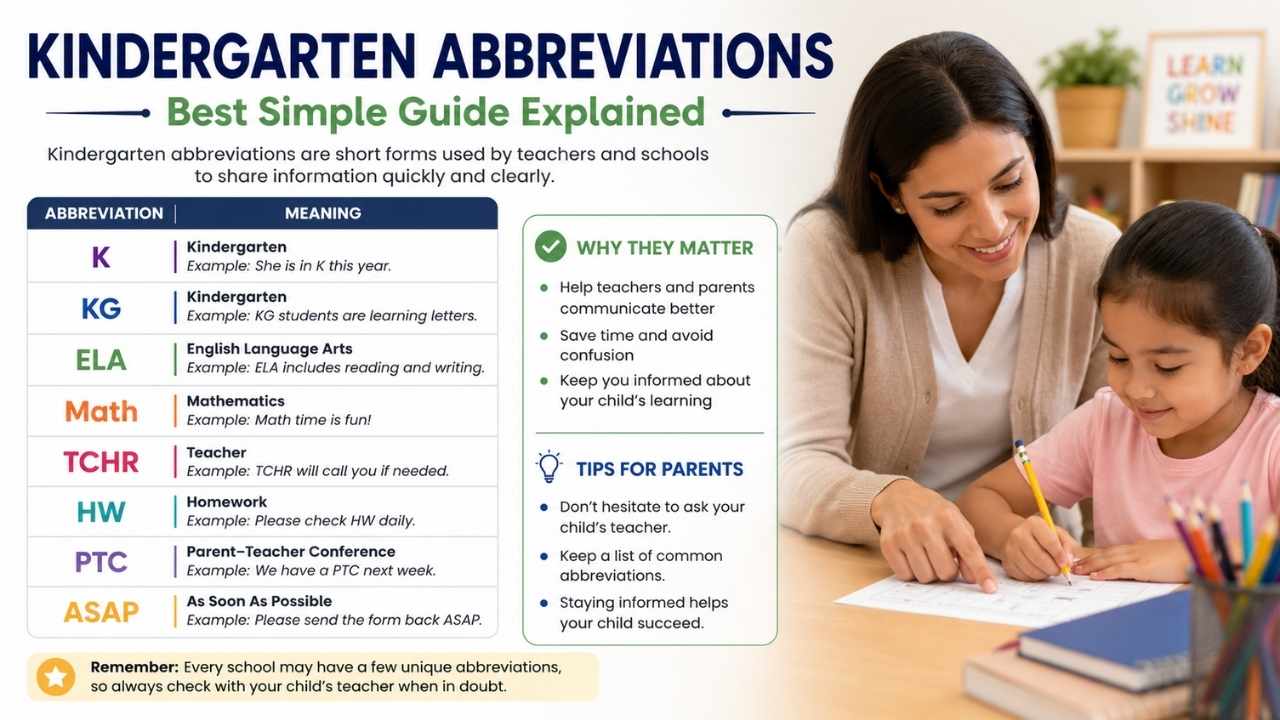
Kindergarten abbreviations are short forms used in education to represent different early learning levels such as KG (Kindergarten), PK (Pre-Kindergarten), and ECE (Early Childhood Education). These abbreviations are commonly seen in school admission forms, report cards, and academic records, where space is limited and clear communication is needed.
Many parents and teachers search for the abbreviation for kindergarten or the kindergarten short form because different schools use different terms like K, KG, or KDG. In some systems, you may also see related terms such as ECCE (Early Childhood Care and Education) or preschool-level labels.
Understanding these kindergarten abbreviations helps parents decode school documents easily and compare education levels like PK vs KG vs Nursery. This guide will explain all important meanings, variations, and real usage so you can clearly understand how these educational terms are used in different contexts.
Quick Answer
Kindergarten abbreviations are short forms used in education to represent early learning stages like KG (Kindergarten), PK (Pre-Kindergarten), K (Kindergarten), ECE (Early Childhood Education), and ECCE (Early Childhood Care and Education). These terms appear in school forms, reports, and admissions. They help parents and teachers quickly understand a child’s education level, such as KG vs PK vs Nursery, in a simple and clear way.
Most Common Kindergarten Abbreviations Explained
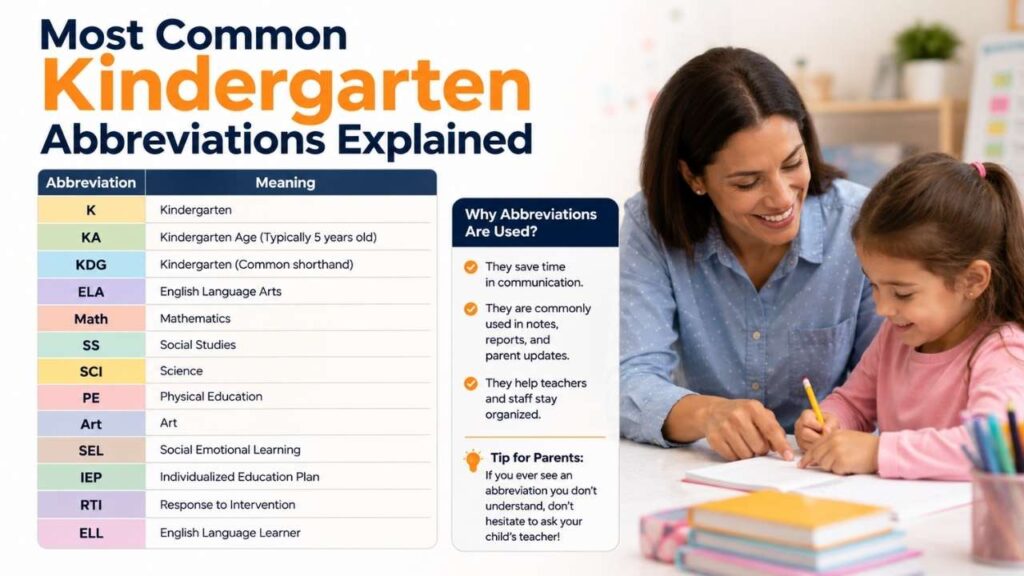
The most common kindergarten abbreviations are used in almost every education system, but their meaning can slightly vary. The most widely used term is KG, which stands for Kindergarten. Another common form is PK, meaning Pre-Kindergarten, which is the stage before KG. In some countries, schools also use K as a short form for Kindergarten in forms and records.
Less common abbreviations include KDG and KND, which are sometimes used in internal school systems or databases. These are alternative ways of writing the same idea: early school learning level. Many people search for the kindergarten abbreviation meaning or ask what the short form of kindergarten is because they see different versions in documents.
All these forms belong to basic school abbreviation kindergarten systems, and they help organize student levels in a simple and structured way for teachers, schools, and parents.
Early Childhood Education Abbreviations You Should Know
Early childhood education uses many important abbreviations that describe a child’s learning stages before primary school. The most common is ECE, which stands for Early Childhood Education. Another important term is ECCE, meaning Early Childhood Care and Education, which focuses on both learning and care in early years.
Along with these, you will also see KG (Kindergarten) and PK (Pre-Kindergarten), which are part of the early school system. Some schools also use Nursery and Preschool, which describe even earlier learning stages. These terms are often included in the broader list of early education abbreviations.
Parents often search for these meanings when checking school admission forms or understanding class levels like KG vs PK vs Nursery. Knowing these abbreviations makes it easier to understand the full structure of early learning and helps you follow your child’s progress in a clear and simple way.
KG vs PK vs Nursery vs Preschool
Understanding the difference between KG, PK, Nursery, and Preschool is very important for parents. PK (Pre-Kindergarten) is usually the first stage and is meant for younger children who are preparing for school. After that comes KG (Kindergarten), which is a more structured learning stage.
Nursery is often similar to PK in many countries, but some schools treat it as a separate level. Preschool is a general term that can include both Nursery and PK, depending on the education system. These differences are part of common kindergarten terminology used in schools.
Many parents search for KG vs PK meaning or difference between kindergarten and preschool because the naming system changes from country to country. Even though the names are different, all these stages belong to early childhood education, where children learn basic skills like reading, numbers, and social behavior in a simple and friendly environment.
How Kindergarten Abbreviations Are Used in Schools
Kindergarten abbreviations are widely used in schools to make communication faster and clearer. You will often see KG, PK, and ECE written on admission forms, report cards, and school databases. These short forms help teachers and administrators manage student records easily.
For example, instead of writing “Kindergarten,” schools may simply write KG class or use PK for Pre-Kindergarten. These abbreviations are also used in school admission systems, where space is limited and data must be organized quickly. Many parents notice these terms when filling out forms and search for the kindergarten abbreviation meaning to understand them better.
These terms are part of a larger set of school level abbreviations used in education systems worldwide. They help create a simple structure for early learning stages and ensure that everyone—teachers, parents, and administrators—can understand a child’s education level without confusion.
Regional Differences in Kindergarten Terminology
Kindergarten abbreviations are not the same in every country, and this often confuses parents. In the USA, the most common terms are K or KG for Kindergarten and PK for Pre-Kindergarten. In many Asian countries, schools use KG, Nursery, and Preschool as standard levels.
In the UK education system, the term “Kindergarten” is usually not used. Instead, children attend Reception class, which serves a similar purpose. These differences create variations in early childhood education abbreviations across regions.
Because of this, people often search for the kindergarten abbreviation in different countries or ask why KG vs PK usage changes. All these terms still belong to the same early learning stage, but the naming system depends on local education rules. Understanding these regional differences helps parents avoid confusion when moving between countries or comparing school systems internationally.
Why Different Abbreviations Exist for Kindergarten
Different kindergarten abbreviations exist because education systems are not the same worldwide. Each country creates its own naming style for early learning stages like KG, PK, Nursery, or Preschool. These differences help schools organize students based on age and curriculum structure.
Another reason is simplicity. Schools use short forms like KG or PK to save space in forms, records, and databases. Over time, these abbreviations became common in both official documents and everyday school communication.
You may also see variations like KDG or KND, which are used in some internal systems. These are not standard worldwide but still represent the same idea of early education levels. Many people search for the official abbreviation of kindergarten because they see multiple versions in different places.
In short, these differences exist to make school systems more flexible, organized, and easier to manage across regions.
Common Mistakes About Kindergarten Abbreviations
Many people misunderstand kindergarten abbreviations, especially when they see different versions like KG, PK, or K. One common mistake is thinking that all countries use the same abbreviation system, but in reality, it changes based on the education system.
Another mistake is mixing PK (Pre-Kindergarten) with KG (Kindergarten). PK is usually an earlier stage, but some parents assume both are the same. People also confuse KDG or KND with official terms, while these are less common and mostly used in internal records.
Some also think KG always means the same age group, but age ranges can differ between countries. This leads to confusion when comparing KG vs PK vs Nursery levels.
Understanding these simple differences helps parents read school documents correctly. These early childhood education abbreviations are easy to understand once you know their meaning and how they are used in different education systems.
Kindergarten Abbreviations Glossary (Full List)
Here is a simple list of the most common kindergarten abbreviations used in schools and education systems. These short forms help explain early learning stages in a clear way.
- KG = Kindergarten
- PK = Pre-Kindergarten
- K = Kindergarten (used in some countries)
- KDG = Kindergarten (less common abbreviation)
- KND = Kindergarten (rare usage)
- ECE = Early Childhood Education
- ECCE = Early Childhood Care and Education
- Nursery = Early learning stage before KG
- Preschool = Early education before formal schooling
These terms are part of a wider set of education abbreviations list used in early schooling. Parents often search for the kindergarten abbreviation meaning to understand these terms better. Knowing this glossary helps you clearly understand school documents, admission forms, and learning stages without confusion.
FAQs
What is KG short for?
KG is short for Kindergarten, which is an early learning stage where children learn basic reading, writing, and social skills in a simple environment.
What does PK mean in school?
PK means Pre-Kindergarten. It is a level before KG and is designed for younger children who are preparing for formal schooling.
Is KG the same as Preschool?
No, KG (Kindergarten) is more structured and follows a basic school routine, while Preschool is a general term for early learning before KG.
What is the difference between KG and PK?
PK comes before KG. PK focuses on basic readiness, while KG introduces more formal learning like letters, numbers, and classroom habits.
Why do schools use kindergarten abbreviations?
Schools use abbreviations like KG, PK, and ECE to save space and make documents like admission forms and report cards easier to read.
What does K stand for in education?
K is another short form for Kindergarten, mostly used in the United States instead of KG.
Are KG abbreviations the same worldwide?
No, different countries use different terms. For example, some use KG, while others use Nursery or Reception instead.
What is ECCE in early education?
ECCE stands for Early Childhood Care and Education, which focuses on both learning and care in early childhood stages.
What is ECE meaning in school terms?
ECE means Early Childhood Education, which covers all learning before primary school, including KG and Preschool.
Why are there multiple abbreviations for Kindergarten?
Different education systems and countries use different naming styles, which is why you may see KG, K, or other variations in school documents.
Conclusion
Understanding kindergarten abbreviations like KG, PK, K, ECE, and ECCE helps parents and teachers clearly follow early education systems. These short forms are widely used in school admission forms, report cards, and academic records to make communication simple and organized.
Different countries may use different terms, which is why you may see variations like KG vs PK vs Nursery or KDG and KND in some systems. Even though the names change, they all belong to the same early childhood education stage.
By learning these basic education abbreviations, you can easily understand school documents, compare learning levels, and avoid confusion. This guide gives you a complete and simple overview of all important kindergarten-related terms used in education today.

Fahad is a seasoned English language trainer with a focus on IELTS and TEFL preparation.
He holds a Ph.D. in Applied Linguistics and has over 10 years of teaching experience.
Fahad is passionate about helping students achieve fluency and global opportunities.
His classes combine practical techniques with a supportive, student-first approach.