
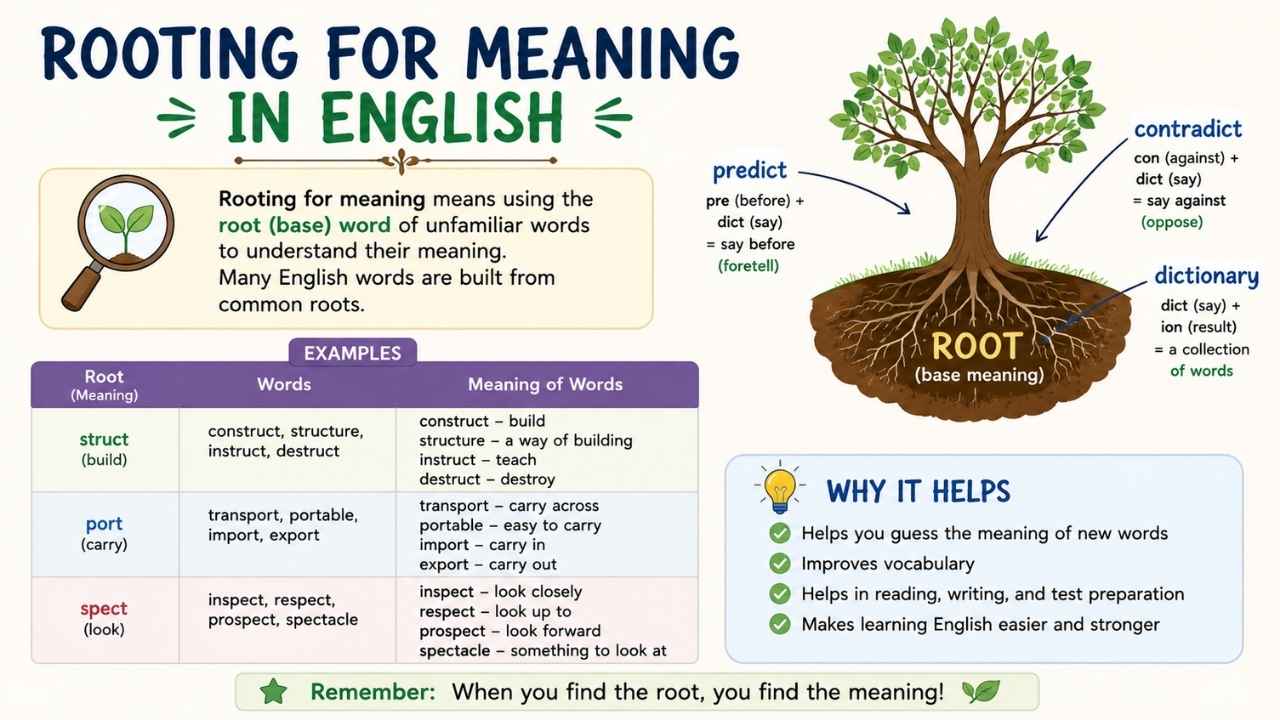
The phrase “rooting for meaning” or more commonly “rooting for someone” simply means supporting someone and hoping they succeed. When you say “I’m rooting for you”, it shows encouragement, motivation, and positive wishes toward another person. In simple English, it is similar to saying you are cheering for someone or wishing them good luck.
Many learners search for rooting for meaning in English, root for meaning, or what does rooting for mean, especially when they hear it in movies, sports, or daily conversations. This expression is commonly used in American English and is often used in friendly and emotional situations.
For example, friends, teachers, or teammates may say it before exams, competitions, or important life events. Overall, the meaning of rooting for someone is very positive—it reflects care, belief, and emotional support for another person’s success.
Quick Answer
Rooting for meaning in English is a phrase that means supporting someone and hoping they succeed. When someone says “I’m rooting for you,” it means they are cheering for you, encouraging you, and wishing you good luck. It is commonly used in casual conversation, especially in American English, during exams, sports, competitions, or important life situations.
Root for vs Rooting for – Is There a Difference?
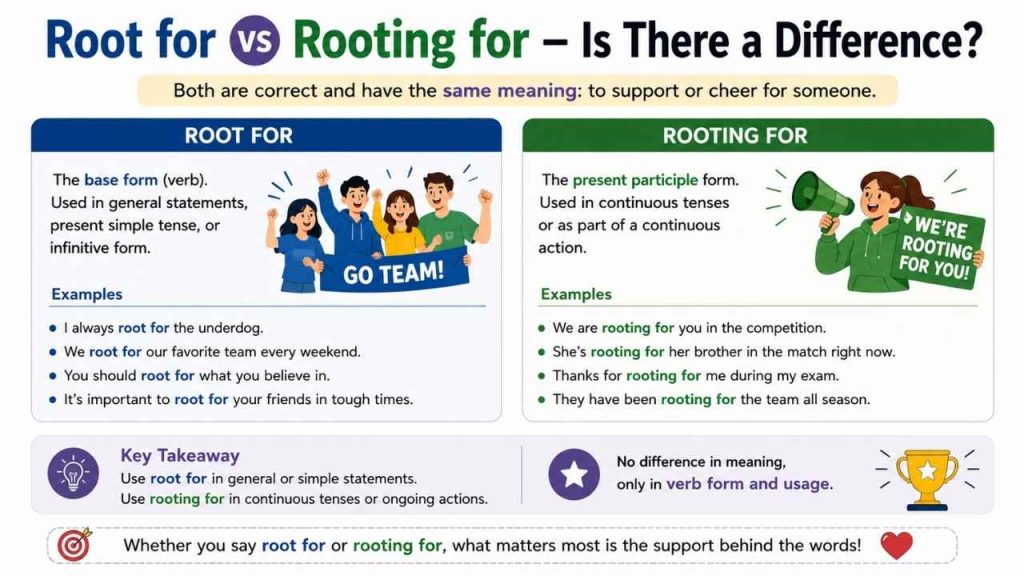
The phrases “root for” and “rooting for” are very similar, and both come from the same idea of showing support. The main difference is grammar and tense. “Root for” is the base form and is often used when talking in general, such as “I root for my favorite team.”
On the other hand, “rooting for” is the continuous form and is used when someone is supporting a person at the moment, like “I am rooting for you.” Many learners search for root for meaning, rooting for meaning in English, and what does rooting for mean because both forms appear in real conversations.
In daily English, both are correct, but “rooting for” sounds more natural in emotional or current situations. So, the difference is small, but using the right form helps your English sound more natural and fluent in real-life communication.
Origin of the Phrase “Root for”
The phrase “root for” comes from American English and is mostly used in everyday speech, especially in sports culture. It started becoming popular when fans began cheering loudly for their favorite teams and players. The word “root” here does not mean plant roots. Instead, it shows strong emotional support.
Over time, people started using it outside sports as well, such as in school, work, and personal life. This is why many learners search for rooting for meaning in English, root for meaning, and meaning of rooting for someone. Today, it is a common expression in friendly conversations.
When someone says “I’m rooting for you,” it means they believe in your success. The phrase is now widely used in movies, social media, and daily talk. Its origin shows how language can grow from sports cheering into a general expression of support and encouragement.
How to Use “Rooting for You” in Real Life
The phrase “rooting for you” is very easy to use in daily English. It is often used when you want to show support, care, or encouragement. For example, you can say it to a friend before an exam, job interview, or sports match.
Many people search for rooting for meaning in English, what does rooting for mean, and root for someone meaning because they hear it in real conversations. In casual talk, you can say, “I’m rooting for you,” to show emotional support. In messages or texts, it is also very common and sounds friendly.
It is mostly used in informal situations, not in very formal writing or business emails. The tone is warm and positive. When you use this phrase, it shows that you believe in someone and hope they will succeed. It is a simple way to make someone feel motivated and confident.
Real-Life Examples of “Rooting for”
Understanding “rooting for” becomes easier when you see real examples. This phrase is used in many daily situations where people show support. For example, you can say, “I’m rooting for you in your exam,” or “We are rooting for our team in the final match.”
These examples show how the phrase is used in both personal and group situations. Many learners search for rooting for meaning in English, what does rooting for mean, and root for meaning in sentences because examples help them understand better. You can also use it in work situations like, “Everyone is rooting for your success in the project.”
It is also common in friendships, such as, “Don’t worry, I’m rooting for you.” These examples show that the phrase is always positive and encouraging. It is used to motivate others and show emotional support in a simple and natural way.
Synonyms of “Rooting for Someone”
There are many simple words and phrases that have a similar meaning to “rooting for someone.” These help you avoid repetition and improve your English. Some common synonyms include support, cheer for, back someone, encourage, and wish success.
For example, instead of saying “I’m rooting for you,” you can say “I support you” or “I’m cheering for you.” Many people search for rooting for meaning in English, root for meaning, and what does rooting for mean to understand these similar expressions. All these words show positive feelings and emotional support.
However, “rooting for” feels more friendly and emotional compared to formal words like “support.” These synonyms are useful in daily conversation, writing, and speaking practice. Using different words makes your English sound more natural and fluent. All these expressions share one idea: helping and motivating someone to succeed in life or challenges.
Rooting for vs Similar Expressions
The phrase “rooting for” is often compared with other similar expressions like support, cheer for, and wish luck. While all these words show positive feelings, their usage is slightly different. “Rooting for” feels more emotional and personal. “Support” is more general and can be used in formal situations. “Cheer for” is often used in sports or group events.
Many learners search for rooting for meaning in English, root for vs support, and what does rooting for mean to understand these differences. For example, “I’m rooting for you” feels warm and friendly, while “I support you” sounds more neutral. “Cheering for you” is usually used when watching a game or event.
Understanding these differences helps you choose the right phrase in the right situation. All these expressions show encouragement, but “rooting for” is the most personal and emotional way to express support in everyday English.
Is “Rooting for You” Formal or Informal?
The phrase “rooting for you” is mostly informal and is used in friendly or personal conversations. You will often hear it between friends, family members, classmates, or teammates.
For example, people say it before exams, interviews, or sports events. Many learners search for rooting for meaning in English, is rooting for formal or informal, and root for meaning because they want to know where to use it correctly. It is not commonly used in formal writing, business emails, or official documents. In those cases, words like “support” or “wish you success” are better.
However, in everyday speech, “I’m rooting for you” sounds warm, natural, and emotional. It shows care and encouragement in a simple way. Using it in the right situation makes your English sound more natural. So, remember—it is best for casual and emotional communication, not professional or formal settings.
Cultural Differences in Meaning (Important Note)
The phrase “rooting for” is mostly used in American English and means supporting someone. However, learners should be careful because the word “rooting” can have a different meaning in British and Australian slang, where it can sound rude or inappropriate.
This is why understanding context is very important. Many people search for rooting for meaning in English, what does rooting for mean, and root for meaning to avoid confusion. In American English, it is a positive and friendly phrase used in daily life, sports, and motivation. In other regions, the meaning may change depending on context, so it is better to use it carefully.
For learners, the safest way is to use it when talking about support or encouragement, such as “I’m rooting for you.” Always remember that English words can have different meanings in different cultures, so context is very important for correct understanding.
Common Mistakes Learners Make
Many English learners make small mistakes when using “rooting for”. One common mistake is thinking it has a literal meaning related to plants or roots. In reality, it means supporting someone and wishing success. Another mistake is using it in very formal writing, where it may not sound appropriate.
People also confuse rooting for meaning in English, root for meaning, and what does rooting for mean, especially when they hear it in different contexts. Some learners also forget the correct grammar, such as saying “I rooting for you” instead of “I am rooting for you.” The correct form is important for natural English. Another mistake is using it without understanding cultural differences.
In American English, it is friendly and positive. Avoid using it in formal emails or official documents. Learning these small details helps you use the phrase correctly and sound more fluent in everyday English conversations.
Emotional Meaning Behind “I’m Rooting for You”
The phrase “I’m rooting for you” has a strong emotional meaning. It shows that someone truly believes in your success and wants you to do well. It is more than just words—it reflects care, support, and encouragement.
People often use it with friends, family, or loved ones during important moments like exams, job interviews, or personal challenges. Many learners search for rooting for meaning in English, what does rooting for mean, and root for someone meaning because they want to understand this emotional depth.
When someone says it, they are not only wishing luck but also showing trust in your abilities. It helps build confidence and motivation. This phrase is often used in daily conversations and social media to encourage others. Overall, it carries a positive emotional message that helps people feel supported and less alone during difficult or important times.
Common Situations Where Native Speakers Use It
Native speakers use “rooting for” in many everyday situations where they want to show support. It is often used before exams, sports matches, job interviews, or competitions. For example, friends might say, “I’m rooting for you in your test,” or “We are rooting for our team today.”
Many learners search for rooting for meaning in English, what does rooting for mean, and root for meaning in sentences because they want to use it naturally. It is also common in personal life situations, such as encouraging someone going through a difficult time. On social media, people often comment “I’m rooting for you” to show support.
It is a friendly and emotional expression that fits informal communication. This phrase helps people feel motivated and confident. It is simple, natural, and widely used in American English conversations, making it an important phrase for everyday English learners.
Learn English Like a Native: Usage Tips
To use “rooting for” like a native speaker, you need to understand tone and context. This phrase is mainly used in casual and emotional situations, not formal writing. Many learners search for rooting for meaning in English, root for meaning, and what does rooting for mean to learn natural usage.
Native speakers often say it in short sentences like “I’m rooting for you!” instead of long explanations. It sounds more natural when used with friends, classmates, or teammates. You should also place it in encouraging moments, such as before exams or competitions. Avoid using it in business emails or official documents.
Another tip is to combine it with emotional support phrases like “You can do it” or “Good luck.” Practicing it in real conversations helps you sound more fluent. The key is to keep it simple, friendly, and natural, just like native English speakers do.
Mini Vocabulary Boost
To understand “rooting for” better, it helps to learn some related vocabulary. These words are often used in similar situations of support and encouragement. For example, support means helping or standing with someone. Cheer means showing happiness and encouragement, especially in sports. Back someone means to support their idea or effort.
Wish someone well means hoping for their success. Many learners search for rooting for meaning in English, root for meaning, and what does rooting for mean because they want to expand their vocabulary. These words are useful in daily conversations, writing, and speaking practice. They all share a similar idea of positivity and encouragement.
However, “rooting for” feels more emotional and friendly compared to formal words. Learning these expressions helps you speak English more naturally and confidently in real-life situations, especially when talking about motivation and support.
Quick Recap
In simple words, “rooting for” means supporting someone and hoping they succeed. It is a friendly and positive phrase used in daily English conversations. Many learners search for rooting for meaning in English, what does rooting for mean, and root for meaning to understand it better.
It is commonly used in American English, especially in casual situations like sports, exams, or personal challenges. The phrase shows care, encouragement, and emotional support. While it is informal, it is very natural in everyday speech. You can use it with friends, classmates, or family members.
It is similar to saying “I support you” or “I’m cheering for you,” but feels more personal. Overall, it is a simple yet powerful expression that helps you motivate others and show that you believe in their success.
FAQs
What does “rooting for you” mean?
It means supporting someone and hoping they succeed.
Is “rooting for” formal or informal?
It is mostly informal and used in casual conversation.
What is “root for” meaning in English?
It means to support or cheer for someone or a team.
What does “I’m rooting for you” mean in English?
It means I am supporting you and wishing you success.
Is “rooting for” used in British English?
It is mainly American English, but understood globally.
What is the difference between “root for” and “support”?
Root for” is more emotional and casual than “support”.
Can we use “rooting for” in writing?
Yes, but mostly in informal writing, not formal documents.
What is the synonym of “rooting for”?
Cheer for, support, or encourage someone.
Where do we use “rooting for”?
In daily conversation, sports, exams, and encouragement.
Is “rooting for” slang?
No, it is a common informal English expression.
Conclusion
In simple words, “rooting for” means supporting someone and hoping they succeed. It is a friendly and emotional phrase often used in daily English conversations, especially in American English.
Many learners search for rooting for meaning in English, root for meaning, and what does rooting for mean because it appears in movies, sports, and real-life talk. The phrase shows care, encouragement, and belief in someone’s success. You can use it with friends, family, or classmates in casual situations like exams, interviews, or competitions.
While it is informal, it sounds natural and warm in everyday speech. Overall, “I’m rooting for you” is a simple yet powerful way to motivate others and express positive support in English.

Fahad is a seasoned English language trainer with a focus on IELTS and TEFL preparation.
He holds a Ph.D. in Applied Linguistics and has over 10 years of teaching experience.
Fahad is passionate about helping students achieve fluency and global opportunities.
His classes combine practical techniques with a supportive, student-first approach.