
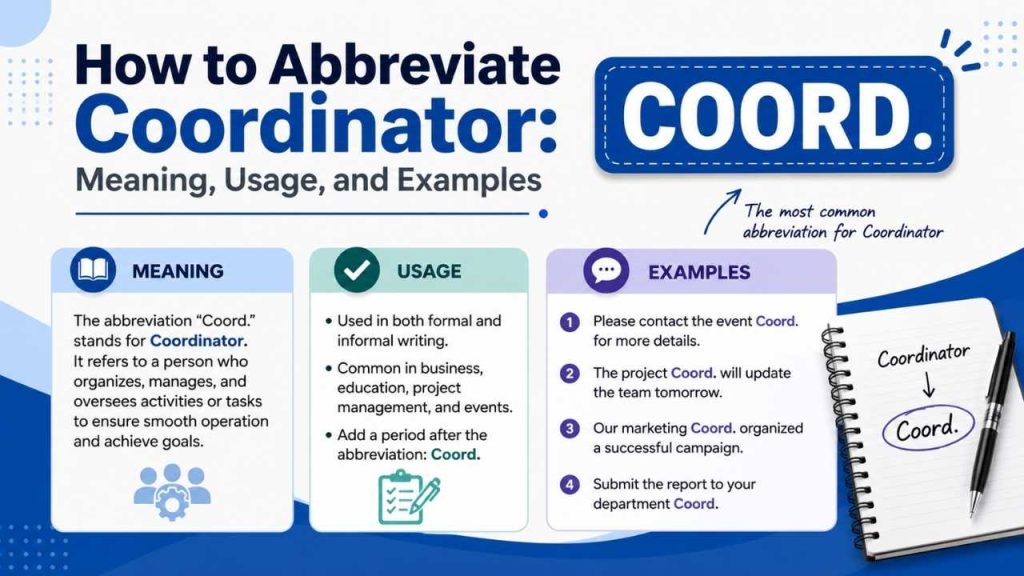
The word “coordinator” is often shortened in writing to save space and improve clarity. The most common abbreviation for coordinator is “Coord.”, which is widely used in job titles, charts, and internal documents. People often search for the coordinator abbreviation or ask how to abbreviate coordinator because they want a correct and professional short form.
In general English usage, Coord. works as the standard short form of coordinator, especially in business settings. However, its use depends on context, since not all writing requires abbreviations. You may also see variations like coor abbreviation, but these are less common.
Understanding the correct abbreviation of coordinator helps in writing job titles like Project Coord. or HR Coord. It ensures your writing stays professional, clear, and easy to read in formal and informal situations.
Quick Answer
The abbreviation for coordinator is commonly “Coord.”, which is the most accepted short form of coordinator in business writing and job titles. It is used in formats like Project Coord. or HR Coord. While some variations exist, “Coord.” is the standard choice. In formal writing, however, it is better to use the full word “coordinator” for clarity and professionalism.
What Does “Coordinator” Mean?
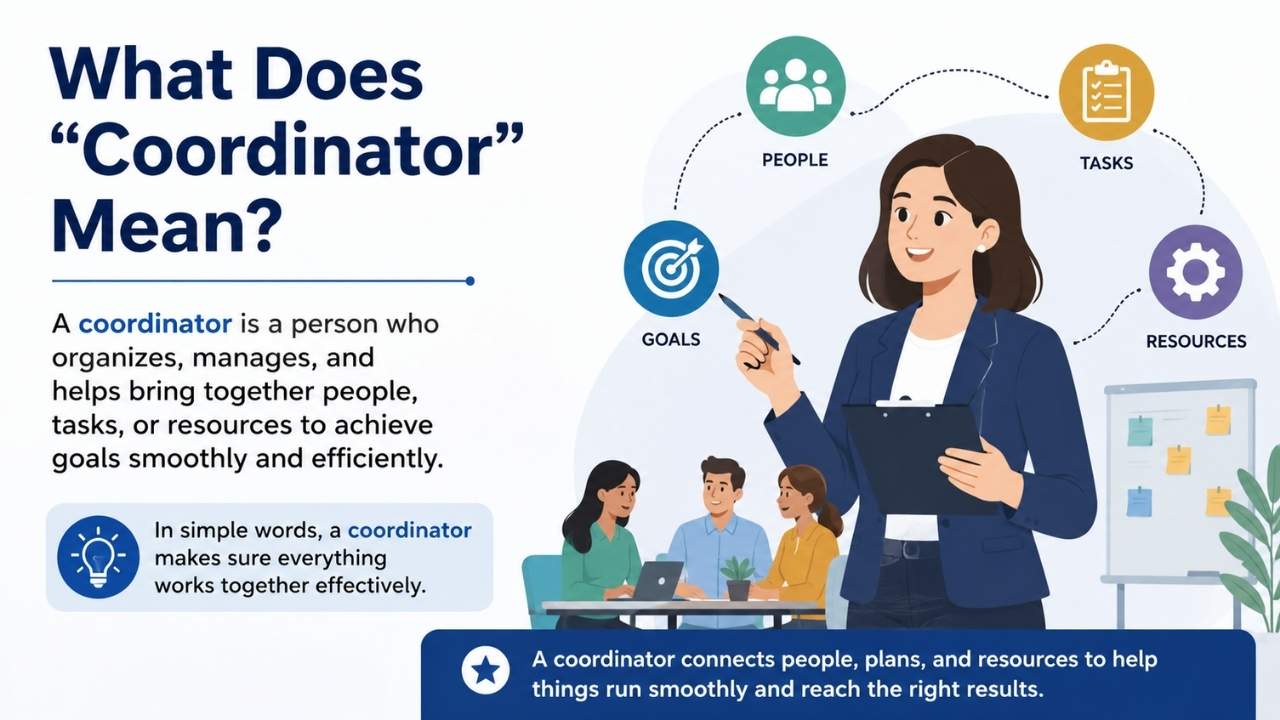
A coordinator is a person who helps organize, manage, and arrange tasks within a team or project. This role is common in offices, schools, hospitals, and many other workplaces. When people search for the coordinator meaning, they usually want to understand the job before learning the coordinator abbreviation or short form.
A coordinator makes sure everything runs smoothly by connecting different people and tasks. For example, a project coordinator manages schedules, while an HR coordinator handles employee-related work. Because the word is long, many people look for the short form of coordinator in writing.
Understanding the role helps you use the correct coordinator abbreviation in context. It also helps avoid confusion when using forms like “Coord.” or other variations. In simple terms, a coordinator is someone who keeps things organized and ensures work is completed on time and in the right way.
What Is the Abbreviation for Coordinator?
The most common abbreviation for coordinator is “Coord.” This is widely used in business writing, job titles, and internal documents. People often search for the coordinator abbreviation or ask how do you abbreviate coordinator because they want a simple and correct form.
In some cases, you may also see “Coor.” or “Coordin.”, but these are less common and not always recommended. The safest and most accepted short form of coordinator is still Coord.
This abbreviation is often used in job titles like Project Coord. or HR Coord. It helps save space while keeping the meaning clear. However, it is important to use it only where appropriate, such as tables or short labels. In full formal writing, it is better to use the complete word “coordinator” instead of shortening it.
Is “Coord.” the Correct Abbreviation?
Yes, “Coord.” is the most widely accepted coordinator abbreviation in English writing. It is commonly used in job titles, business documents, and informal communication. When people search for the abbreviation of coordinator, they usually want confirmation that “Coord.” is correct—and in most cases, it is.
However, there is no strict global rule for abbreviations, so usage can vary. Some style guides prefer avoiding abbreviations in formal writing, while others allow them when space is limited. That is why understanding the coor abbreviation or other forms is also useful, even if they are less common.
In general, Coord. is safe to use when clarity is not affected. It is especially useful in charts, tables, and internal notes. But in official documents or academic writing, it is better to use the full word “coordinator” for better readability and professionalism.
When Should You Use “Coord.”?
The coordinator abbreviation “Coord.” should be used only in situations where space is limited or quick reading is needed. It is commonly used in tables, charts, schedules, and internal documents. Many people search for the short form of coordinator because they want a clean way to fit job titles in small spaces.
For example, in a project plan, you may write Project Coord. instead of Project Coordinator. This helps keep information short and clear. The coord abbreviation is also useful in business notes or internal communication where formal wording is not required.
However, it should not be overused. In formal writing, reports, or public documents, it is better to use the full word “coordinator.” Using abbreviations too often can reduce clarity. So, use Coord. only when it improves readability and keeps your content neat and easy to understand.
When You Should NOT Abbreviate Coordinator
You should avoid using the coordinator abbreviation in formal or important writing. In academic papers, official reports, and public documents, the full word “coordinator” is always better. Many people searching for the abbreviation for coordinator do not realize that using it in the wrong place can reduce clarity.
For example, in resumes or cover letters, it is usually safer to write “Project Coordinator” instead of “Project Coord.” This ensures a professional tone. The same applies to legal documents and formal communication, where abbreviations like coord abbreviation or coor abbreviation may look unprofessional.
Using the full word also helps avoid confusion, especially for international readers who may not understand shortened forms. While the short form of coordinator is useful in simple formats, clarity should always come first. So, only use “Coord.” when space is limited and the meaning is still very clear.
Examples of Coordinator Abbreviation in Use
The coordinator abbreviation “Coord.” is often used in real job titles and business settings. It helps shorten long titles while keeping the meaning clear. People searching for the short form of coordinator usually want practical examples like these.
For example, Project Coordinator becomes Project Coord. This is commonly used in internal documents or planning sheets. Similarly, HR Coordinator can be written as HR Coord., and Event Coordinator becomes Event Coord.
These examples show how the coord abbreviation is used in real situations. It is important to keep the abbreviation consistent so the meaning stays clear. Some organizations may also use full words instead of abbreviations, depending on their style rules.
In general, the coordinator abbreviation works best in tables, charts, or short labels where space is limited. In full sentences or formal writing, it is better to use the complete word “coordinator” for better understanding.
Common Mistakes When Abbreviating Coordinator
One common mistake is using incorrect forms like “Co.” instead of the correct coordinator abbreviation. This is confusing because “Co.” is often used for company names. People also mix up coord abbreviation and coor abbreviation, even though “Coord.” is the most accepted form.
Another mistake is overusing the short form of coordinator in formal writing. While it is fine in tables or notes, it should not replace the full word in important documents. Many users searching for the abbreviation of coordinator assume it is always acceptable, but context matters.
Inconsistent writing is another issue. Switching between “Coord.” and “Coordin.” in the same document can confuse readers. To stay clear and professional, always use one standard form.
In short, the safest choice is “Coord.”, and it should be used carefully to maintain clarity, professionalism, and easy understanding in your writing.
Style Guide Perspective
Different style guides treat the coordinator abbreviation in different ways. Some allow it, while others prefer writing the full word “coordinator.” This is why people often search for the abbreviation for coordinator to understand what is correct in professional writing.
In general business writing, “Coord.” is accepted when space is limited. However, in formal style guides like AP-style writing, abbreviations are often avoided unless necessary. This means the short form of coordinator should be used carefully.
In workplace documents, internal communication may allow more flexibility. You might see coord abbreviation used in charts or tables, but full words are preferred in reports and public content.
The main rule is simple: clarity first. If the abbreviation improves readability, it is fine to use. If it creates confusion, always write “coordinator.” Understanding these style differences helps you use the coor abbreviation correctly and professionally.
FAQ
What is the abbreviation for coordinator?
The most common coordinator abbreviation is “Coord.”
Is “Coord.” correct?
Yes, it is the standard short form of coordinator in many cases.
Can I use it in resumes?
It is better to write “coordinator” in resumes for professionalism.
What is the short form of coordinator?
The short form is “Coord.”
Is “Coor” correct?
No, “Coord.” is more widely accepted.
Where can I use it?
Use it in tables, charts, and internal documents.
Should I always abbreviate it?
No, use it only when space is limited.
Conclusion
In simple terms, the abbreviation for coordinator is most commonly “Coord.”, which is widely used as the short form of coordinator in job titles, tables, and business writing. It helps save space while keeping meaning clear. However, not all situations require an abbreviation.
In formal documents, resumes, and academic writing, it is better to use the full word “coordinator” to maintain clarity and professionalism. Variations like coor abbreviation exist but are not commonly used or recommended.
Understanding when to use the coordinator abbreviation and when to avoid it is important for clear and effective writing. Always choose readability first, and use abbreviations only when they improve simplicity without causing confusion.

Fahad is a seasoned English language trainer with a focus on IELTS and TEFL preparation.
He holds a Ph.D. in Applied Linguistics and has over 10 years of teaching experience.
Fahad is passionate about helping students achieve fluency and global opportunities.
His classes combine practical techniques with a supportive, student-first approach.