
English slang can be funny, confusing, and sometimes risky—especially if you’re not a native speaker. One word that often raises eyebrows is “motorboat.” You might hear it in movies, jokes, or online conversations and wonder: What does it really mean? Is it rude? Can I use it?
This guide breaks everything down in clear, simple language. By the end, you’ll understand the meaning, where it came from, how native speakers use it, and—just as importantly—when not to use it.
What “Motorboat” Really Means (Literal vs. Slang Definitions)
To understand slang, it always helps to start with the literal meaning.
The Dictionary Meaning (Literal)
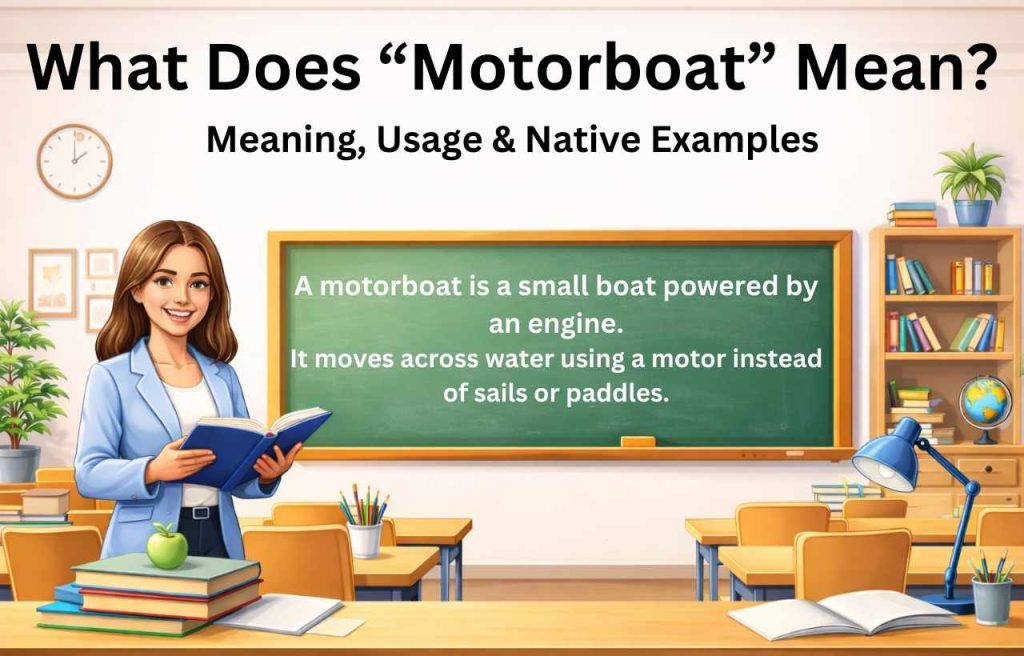
A motorboat is a small boat powered by an engine.
It moves across water using a motor instead of sails or paddles.
This meaning is:
- Neutral
- Non-offensive
- Common in travel, sports, and boating contexts
Example:
“They rented a motorboat at the lake.”
No confusion there.
The Slang Meaning (Colloquial)
In slang, “motorboat” means something very different.
It’s a humorous and suggestive term used to describe a playful action involving a person’s face and another person’s chest, meant to sound like a motor or engine.
Important notes:
- It’s not a formal word
- It’s often used jokingly
- It can feel inappropriate or offensive in many situations
Native speakers usually understand it as playful slang, but context is everything.
Why Euphemisms Exist in English
English speakers often use euphemisms—indirect or funny words—to talk about sensitive topics.
Why?
- To avoid being too direct
- To add humor
- To reduce awkwardness
“Motorboat” is one of those euphemisms. It sounds silly and mechanical, which softens the meaning—but doesn’t remove the sensitivity.
Origins & Evolution of the Term
Understanding where a slang word comes from helps explain how it’s used today.
Where the Slang Likely Came From
The slang meaning of “motorboat” comes from:
- The sound of a motor
- The idea of playful vibration or movement
- Visual humor (something serious described in a silly way)
It likely started as joke language, not serious conversation.
How Humor and Metaphor Shaped the Term
English slang often uses:
- Machines
- Animals
- Everyday objects
…to describe human behavior humorously.
Calling something “motorboating” turns an intimate action into:
- A cartoon-like image
- A joke rather than a serious statement
That’s why it’s often used in comedy, teasing, or exaggeration.
When It Entered Mainstream Usage
The term became more widely known through:
- Comedy movies
- Stand-up comedy
- Internet memes
- Casual locker-room humor
It’s recognized by many people, but that doesn’t mean it’s widely used in polite conversation.
When Native Speakers Actually Use “Motorboat”
This is one of the most important sections—because many learners assume that recognizing a slang word means using it.
That’s not true.
Casual Speech (Very Limited)
Native speakers might use “motorboat”:
- With close friends
- In private conversations
- When joking, not being serious
Even then, many people avoid saying it out loud.
Jokes and Teasing
Most real-life usage is:
- Sarcastic
- Exaggerated
- Clearly meant as a joke
Example:
“He was joking around, saying he’d motorboat the air.”
Notice how it’s not literal and clearly playful.
Media References (TV, Movies, Memes)
You’re more likely to:
- Hear it in a comedy movie
- See it referenced online
- Read it in humorous articles
The media uses slang more freely than real life, which can be misleading for learners.
Realistic Native-Sounding Examples (With Context Notes)
Let’s look at examples—but with important explanations.
Why Tone and Relationship Matter
Slang is not just about words. It’s about:
- Tone of voice
- Relationship between people
- Social setting
The same word can feel:
- Funny with one person
- Offensive with another
Examples That Sound Natural (Not Awkward)
Example 1: Joking Context
“It was a joke from a silly movie—nothing serious.”
Here, the speaker is distancing themselves from the act.
Example 2: Media Reference
“That joke wouldn’t work today—it hasn’t aged well.”
This shows awareness and maturity.
Example 3: Storytelling
“He made an immature joke, and everyone rolled their eyes.”
Notice how native speakers often talk about the word, not use it directly.
Social Boundaries, Consent & Why Context Is Everything
This section is critical, especially for non-native speakers.
Why This Term Can Be Sensitive
“Motorboat” refers to:
- Physical closeness
- Someone else’s body
That automatically makes it:
- Personal
- Potentially invasive
- Easy to misunderstand
Even if said as a joke, it can:
- Make people uncomfortable
- Feel disrespectful
- Cross social boundaries
Situations Where It’s Inappropriate
Never use this word:
- At work
- At school
- With strangers
- In professional writing
- In public online comments
Even among friends, many people still avoid it.
Respectful Communication Tips
Before using slang like this, ask yourself:
- Is this a private, safe setting?
- Do I know this person very well?
- Could this be misunderstood?
If there’s any doubt, don’t use it.
Common Misunderstandings Non-Native Speakers Make
This is where many learners run into trouble.
Overusing Slang
Some learners think slang = sounding fluent.
In reality:
- Too much slang sounds unnatural
- Sensitive slang sounds risky
Fluency is about judgment, not vocabulary size.
Using It in Professional Settings
This is a major mistake.
Never use “motorboat”:
- In emails
- In presentations
- In interviews
- In academic writing
Even mentioning it casually can hurt your credibility.
Misreading Humor vs. Offense
English humor is very context-dependent.
What sounds funny in:
- A movie
- A comedy show
…may sound rude in real life.
Native speakers learn this through culture—not grammar books.
Safer & Politer Alternatives (Depending on Situation)
If you’re trying to express humor, affection, or playfulness, there are much better options.
Playful Alternatives
These keep things light without being explicit:
- “Being silly”
- “Joking around”
- “Messing about”
Example:
“He was just being silly.”
Neutral Alternatives
Good for general conversation:
- “Making an immature joke”
- “Crossing a line”
- “Taking it too far”
Example:
“That joke crossed a line.”
Indirect Alternatives
When you want to avoid details:
- “Inappropriate behavior”
- “Uncomfortable joke”
- “Something personal”
These are especially useful in:
- Work environments
- Public discussions
Final Thoughts: Understanding Slang Is About Judgment
Knowing what “motorboat” means doesn’t mean you should use it.
In fact, most fluent speakers rarely do.
Real language mastery comes from:
- Understanding context
- Respecting boundaries
- Choosing words carefully
If you remember one thing from this guide, let it be this:
Slang isn’t about sounding bold—it’s about sounding aware.
By understanding not just the meaning, but the culture behind words like “motorboat,” you’re already communicating like a native speaker—thoughtfully, respectfully, and confidently.

Fahad is a seasoned English language trainer with a focus on IELTS and TEFL preparation.
He holds a Ph.D. in Applied Linguistics and has over 10 years of teaching experience.
Fahad is passionate about helping students achieve fluency and global opportunities.
His classes combine practical techniques with a supportive, student-first approach.