
Adjectives are words that describe people, places, things, or ideas, helping us make our writing more interesting and clear. Learning adjectives that start with “I” can improve your vocabulary, make your sentences more expressive, and help you communicate your thoughts better.
Whether you are a student, writer, or English learner, knowing a wide range of I adjectives allows you to describe emotions, personalities, and objects in unique ways. In this guide, we will explore positive, negative, neutral, and rare adjectives that start with I, with examples to show how each word is used in everyday writing. You will also find tips to use these adjectives effectively, making your writing more vivid, precise, and memorable.
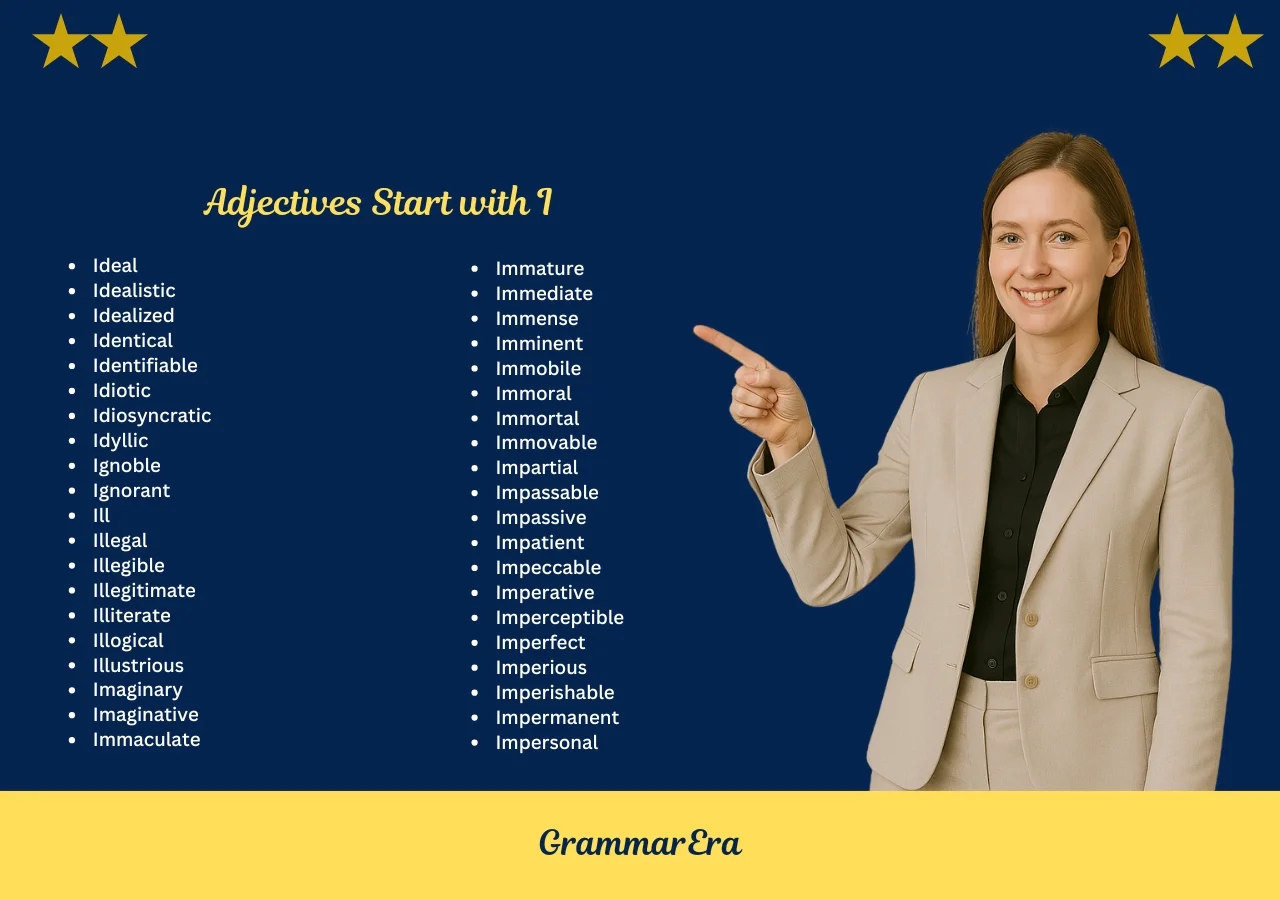
Complete List of Adjectives Starting with I
| Ideal | Idealistic | Idealized | Identical |
| Identifiable | Idiotic | Idiosyncratic | Idyllic |
| Ignoble | Ignorant | Ill | Illegal |
| Illegible | Illegitimate | Illiterate | Illogical |
| Illustrious | Imaginary | Imaginative | Immaculate |
| Immature | Immediate | Immense | Imminent |
| Immobile | Immoral | Immortal | Immovable |
| Impartial | Impassable | Impassive | Impatient |
| Impeccable | Imperative | Imperceptible | Imperfect |
| Imperious | Imperishable | Impermanent | Impersonal |
| Impertinent | Impetuous | Impish | Impolite |
| Important | Imposing | Impossible | Impoverished |
| Impractical | Imprecise | Impressive | Improper |
| Improved | Impulsive | Inaccessible | Inaccurate |
| Inactive | Inadequate | Inadmissible | Inadvertent |
| Inalienable | Inane | Inappropriate | Inarticulate |
| Inattentive | Inaudible | Inauthentic | Incapable |
| Incendiary | Incessant | Incidental | Incisive |
| Inclement | Inclusive | Incoherent | Incomparable |
| Incompatible | Incompetent | Incomplete | Incomprehensible |
| Inconceivable | Inconclusive | Incongruous | Inconsequential |
| Inconsiderate | Inconsistent | Inconspicuous | Inconstant |
| Incontestable | Incontinent | Incontrovertible | Inconvenient |
| Incorrect | Incorrigible | Incredible | Indecent |
| Indecisive | Indefatigable | Indefensible | Indefinable |
| Indefinite | Indelible | Indelicate | Indispensable |
| Indistinct | Individual | Indivisible | Indolent |
| Indomitable | Indubitable | Indulgent | Industrious |
| Ineffective | Inefficient | Inelegant | Ineligible |
| Inept | Inescapable | Inessential | Inestimable |
| Inevitable | Inexcusable | Inexhaustible | Inexplicable |
| Inexpressible | Inextricable | Infallible | Infamous |
| Infantile | Inferior | Infinite | Inflammable |
| Inflexible | Influential | Informal | Informative |
| Infuriating | Ingenious | Ingenuous | Inhabitable |
| Inherent | Inhibited | Inhospitable | Inhuman |
| Inhumane | Inimitable | Innocent | Innovative |
| Inoffensive | Inopportune | Inordinate | Inorganic |
| Inquisitive | Insane | Insecure | Insensitive |
| Insidious | Insignificant | Insincere | Insipid |
| Insolent | Inspiring | Instantaneous | Instinctive |
| Institutional | Instructive | Instrumental | Insufficient |
| Insular | Insulting | Intangible | Integral |
| Integrated | Intellectual | Intelligent | Intense |
| Intensive | Intentional | Interactive | Interchangeable |
| Interdependent | Interesting | Intermittent | Internal |
| International | Interpersonal | Interrelated | Intervening |
| Intimate | Intimidating | Intolerable | Intolerant |
| Intoxicating | Intricate | Intriguing | Introductory |
| Introspective | Intrusive | Intuitive | Invaluable |
| Invariable | Invasive | Inventive | Inverse |
| Invisible | Inviting | Involuntary | Involved |
| Invulnerable | Irascible | Irate | Iridescent |
| Irksome | Irregular | Irrelevant | Irremovable |
| Irreplaceable | Irrepressible | Irresistible | Irresponsible |
| Irreverent | Irritable | Irritating | Isolated |
| Itchy | Icy |
What Are Adjectives and Their Role in English
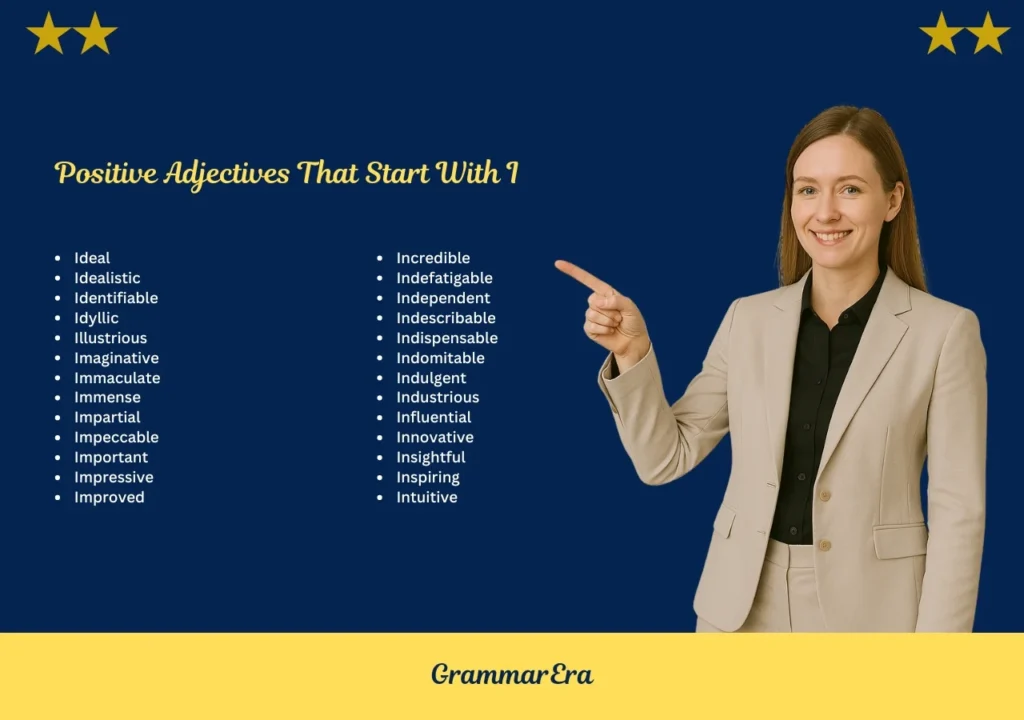
Adjectives are words that describe nouns and give more information about size, color, feelings, or qualities. They make sentences clearer and more vivid. For example, in “She has an intelligent idea,” the word intelligent describes the noun idea. Adjectives starting with I are especially useful because they include positive, negative, and neutral words that can describe emotions, people, or things.
By learning adjectives that start with I, you can make your writing more expressive and more precise. Whether you are writing stories, essays, or descriptions, using a variety of adjectives helps your sentences stand out. This section lays the foundation for understanding how to use I adjectives effectively in writing.
Recommended For You: Adjectives Start with B: Boost Your Vocabulary
What Are Adjectives and Their Role in English
Adjectives are words that describe nouns and give more information about size, color, feelings, or qualities. They make sentences clearer and more vivid. For example, in “She has an intelligent idea,” the word intelligent describes the noun idea. Adjectives starting with I are especially useful because they include positive, negative, and neutral words that can describe emotions, people, or things.
By learning adjectives that start with I, you can make your writing more expressive and more precise. Whether you are writing stories, essays, or descriptions, using a variety of adjectives helps your sentences stand out. This section lays the foundation for understanding how to use I adjectives effectively in writing.
Negative Adjectives That Start With I
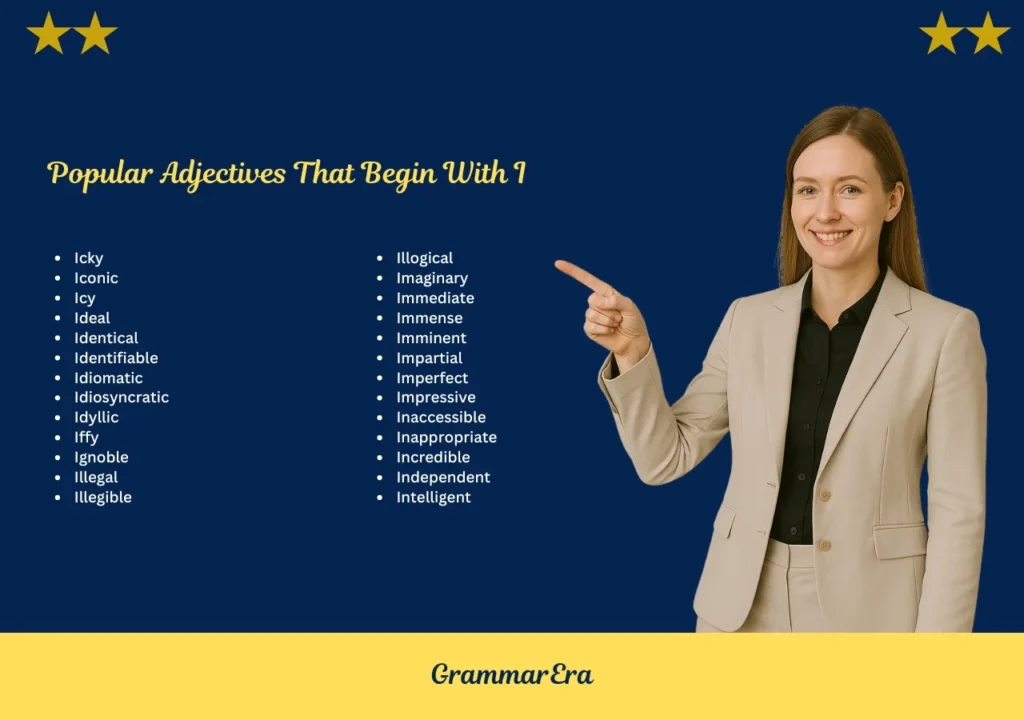
Negative adjectives starting with I describe unfavorable qualities, emotions, or situations. These words help writers explain problems or challenges clearly. Examples include ignorant, irate, irresponsible, incompetent, and insecure. For instance, “He gave an irresponsible answer,” or “The team felt insecure about the decision.”
Negative I adjectives are useful in storytelling, academic writing, and character descriptions, helping readers understand flaws or obstacles. Using these words thoughtfully makes your writing more realistic and relatable. By practicing negative adjectives that start with I, you can describe situations and characters accurately, balance your descriptions, and add depth to essays, narratives, or professional reports.
Neutral Adjectives That Start With I
Neutral adjectives starting with I describe things or qualities without expressing strong feelings. They are practical for descriptions and observations. Examples include indigo, integral, instant, independent, and internal. For example, “The internal report was ready,” or “She wore an indigo dress.”
Neutral I adjectives are helpful in academic writing, descriptions, and reports because they provide information clearly and objectively. Using these adjectives makes your writing precise, simple, and easy to understand. By learning neutral adjectives starting with I, you can describe people, objects, and situations without judgment, ensuring your sentences are clear, professional, and balanced.
Uncommon & Advanced I Adjectives
Uncommon or advanced adjectives starting with I make your writing more sophisticated and creative. These words are often rare or literary, helping your sentences stand out. Examples include inimitable, ineffable, inexorable, intangible, and incisive. You can say, “Her talent was inimitable,” or “He made an incisive observation.”
These adjectives are useful in creative writing, professional essays, and storytelling, showing depth and precision. By including uncommon I adjectives, your writing becomes more engaging and memorable. Practicing these words helps learners and writers expand their vocabulary, improve expression, and create unique, high-quality sentences that catch readers’ attention.
I Adjectives Categorized by Emotion
Some adjectives starting with I describe emotions or feelings, helping readers connect with your writing. Positive emotions include inspiring, invigorating, and impressive. Negative emotions include irate, insecure, and indifferent. Neutral emotions include indifferent, internal, or instinctive. Using these adjectives in sentences makes writing more expressive and relatable.
For example, “Her speech was invigorating,” or “He felt insecure about the test.” Categorizing I adjectives by emotion allows writers to choose words that match tone and context, whether in essays, stories, or professional communication.
Practicing emotional I adjectives improves your ability to describe moods, reactions, and character feelings accurately.
FAQs About Adjectives That Start With I
What are adjectives that start with I?
They are describing words that begin with “I,” like intelligent and interesting.
What are positive adjectives starting with I?
Examples include inspiring, innovative, and impressive.
How can I use adjectives that start with I to describe a person?
You can use words like independent, intelligent, or imaginative.
Why learn adjectives starting with I?
They improve vocabulary and help in writing and speaking clearly.
These common questions about I adjectives help learners understand their use better and improve communication skills.
Conclusion
Adjectives that start with I are useful for improving vocabulary and communication. They help you describe people, places, and ideas in a clear way. From positive and negative adjectives to creative and professional words, each type has its own value.
Learning these descriptive words that start with I can make your writing more engaging and meaningful. Whether you are a student, writer, or learner, these words will help you express ideas better.
Start using these I adjectives in daily sentences to build confidence. With regular practice, your vocabulary will grow, and your communication will become more clear and effective.

Fahad is a seasoned English language trainer with a focus on IELTS and TEFL preparation.
He holds a Ph.D. in Applied Linguistics and has over 10 years of teaching experience.
Fahad is passionate about helping students achieve fluency and global opportunities.
His classes combine practical techniques with a supportive, student-first approach.