

“Je t’aime aussi” meaning is simple and beautiful. It translates to “I love you too in French.” This phrase is used when someone says “je t’aime” (I love you), and you want to return the same feeling.
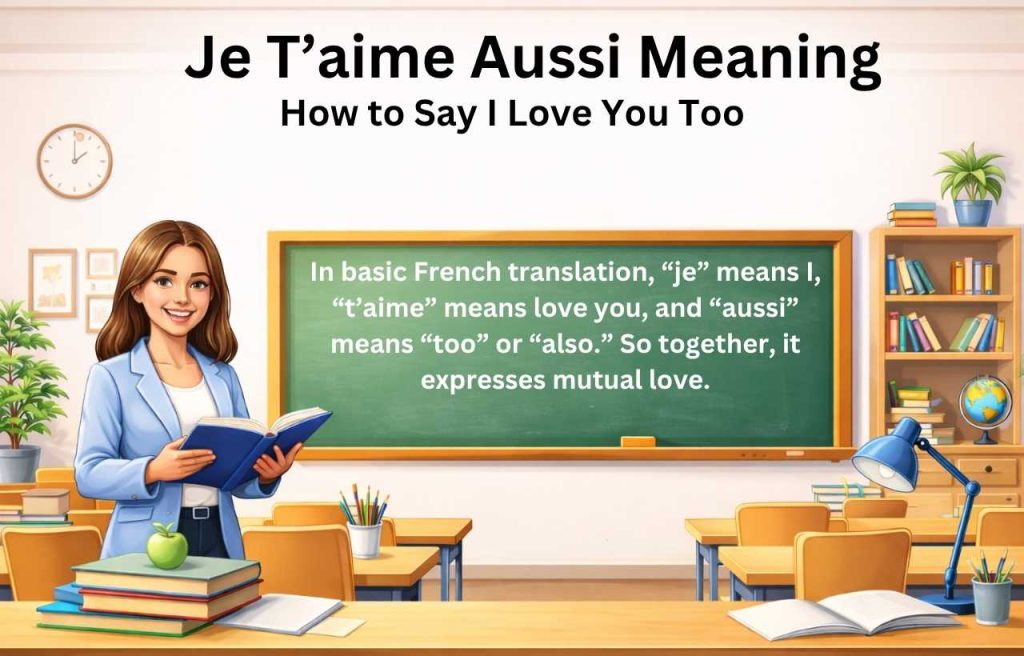
In basic French translation, “je” means I, “t’aime” means love you, and “aussi” means “too” or “also.” So together, it expresses mutual love.
Many learners search for what does je t’aime aussi mean because they hear it in movies, songs, or conversations. It is one of the most common French love phrases used in romantic situations.
Understanding the je t’aime aussi meaning in English helps beginners speak naturally and confidently in real-life conversations.
How to Pronounce “Je T’aime Aussi” Correctly
Learning the je t’aime aussi pronunciation is important if you want to sound natural. In simple terms, it is pronounced like: “zhuh tem oh-see.” The “j” sounds soft, like the “s” in measure. The phrase flows smoothly when spoken together.
Many beginners search for je t’aime aussi pronunciation in English to feel more confident while speaking. Try saying it slowly first, then repeat it faster to match real French conversation.
When you say I love you too in French, focus on linking the words. French speakers often blend sounds, so it doesn’t sound robotic.
Practicing this French love phrase daily will help you speak more naturally and improve your confidence in real-life situations.
When to Use “Je T’aime Aussi” (Real-Life Situations)
Knowing when to use je t’aime aussi helps you avoid awkward moments. This phrase is mainly used in romantic situations when someone expresses love first. You reply with “je t’aime aussi” to show you feel the same.
In French relationships, this phrase carries emotional weight. It is not used casually with everyone. That’s why many learners ask, can you say je t’aime aussi to friends? Usually, it is better for romantic partners.
You may also see je t’aime aussi in conversation during texts or messages. It works naturally when replying to “I love you.”
Understanding the je t’aime aussi usage helps you speak correctly and avoid using it in the wrong context.
How to Respond to “Je T’aime” in French
When someone says “je t’aime,” the most common reply is “je t’aime aussi.” It directly means I love you too in French and shows shared feelings.
However, there are other ways to respond depending on your emotions. You can say “moi aussi je t’aime,” which has the same meaning but adds emphasis. Some people prefer softer replies like “je t’adore.”
Many learners search how to respond to je t’aime in French to sound more natural in real conversations. You can also explore je t’aime aussi reply examples to understand different tones.
Choosing the right reply depends on your relationship. Always match your response with your true feelings and the situation.
Examples of “Je T’aime Aussi” in Conversations
Seeing je t’aime aussi examples makes learning easier. Here are simple French conversation examples you can use:
Example 1:
A: Je t’aime
B: Je t’aime aussi
Example 2:
A: I love you
B: Je t’aime aussi
These examples show how the phrase works in real life. Many learners search for examples of je t’aime aussi in sentences to understand natural usage.
You can also use it in text messages, making it useful for je t’aime aussi text meaning. It is short, emotional, and easy to use.
Practicing these French love phrases helps you feel more confident in both speaking and writing.
“Je T’aime” vs “Je T’aime Aussi” (Key Differences)
Understanding the difference between je t’aime and je t’aime aussi is very important. “Je t’aime” means I love you, while “je t’aime aussi” meaning is I love you too.
The first phrase starts the expression of love. The second one is a reply. That’s why je t’aime aussi usage depends on someone speaking first.
Many learners compare je t’aime aussi vs moi aussi je t’aime. Both mean the same, but the second one adds emphasis.
Knowing these differences helps you use the right phrase at the right time. It also improves your understanding of French romantic expressions and real-life conversations.
Variations and Similar French Love Phrases
There are many French love phrases similar to je t’aime aussi. One common variation is “moi aussi je t’aime meaning”, which also means I love you too but sounds stronger.
Another option is “je t’adore,” which means I adore you. It feels lighter and less serious. These variations help you express feelings in different ways.
Many learners search for romantic French phrases for couples to sound more natural. You can mix these expressions depending on your emotions and situation.
Using different phrases improves your French conversation skills and makes your speech more interesting and natural.
Can You Use “Je T’aime Aussi” for Friends or Family?
A common question is, can you say je t’aime aussi to friends or family? The answer depends on the situation. In French culture, this phrase is usually romantic.
For friends or family, people often use softer expressions like “je t’adore.” Using je t’aime aussi in relationships is more common between partners.
Many learners worry about using the wrong phrase. Understanding how French people express love helps you avoid confusion.
In some cases, close family members may use it, but tone matters. Always think about the relationship before using this French love phrase.
Common Mistakes to Avoid When Using “Je T’aime Aussi”
Many beginners make mistakes with je t’aime aussi usage. One common error is using it first. Remember, it is a reply, not a starting phrase.
Another mistake is using it in the wrong context. Since it is a strong French romantic expression, avoid using it casually with friends.
Some learners also ignore pronunciation. Practicing how to pronounce je t’aime aussi correctly helps you sound natural.
Understanding these mistakes improves your confidence and accuracy. It also helps you use je t’aime aussi in conversation the right way without confusion.
Cultural Meaning of “Je T’aime Aussi” in French Relationships
The emotional meaning of je t’aime aussi is deeper than a simple translation. In French relationships, expressing love is taken seriously.
Unlike English, where people say “I love you” easily, French speakers use it carefully. That’s why je t’aime aussi meaning in English may seem simple, but its emotional value is strong.
Many learners are curious about how French people express love. The phrase shows genuine feelings and emotional connection.
Understanding this cultural side helps you use the phrase more naturally and respectfully in real-life situations.
Quick Summary
Je t’aime aussi meaning is “I love you too in French.” It is used as a reply when someone says “je t’aime.”
This French love phrase is mostly used in romantic situations and carries deep emotional meaning. Learning je t’aime aussi pronunciation and usage helps you speak naturally.
You can also explore variations like moi aussi je t’aime and other romantic French phrases.
Understanding context, tone, and culture is key to using this phrase correctly in real conversations.

Fahad is a seasoned English language trainer with a focus on IELTS and TEFL preparation.
He holds a Ph.D. in Applied Linguistics and has over 10 years of teaching experience.
Fahad is passionate about helping students achieve fluency and global opportunities.
His classes combine practical techniques with a supportive, student-first approach.